Fab idea #3

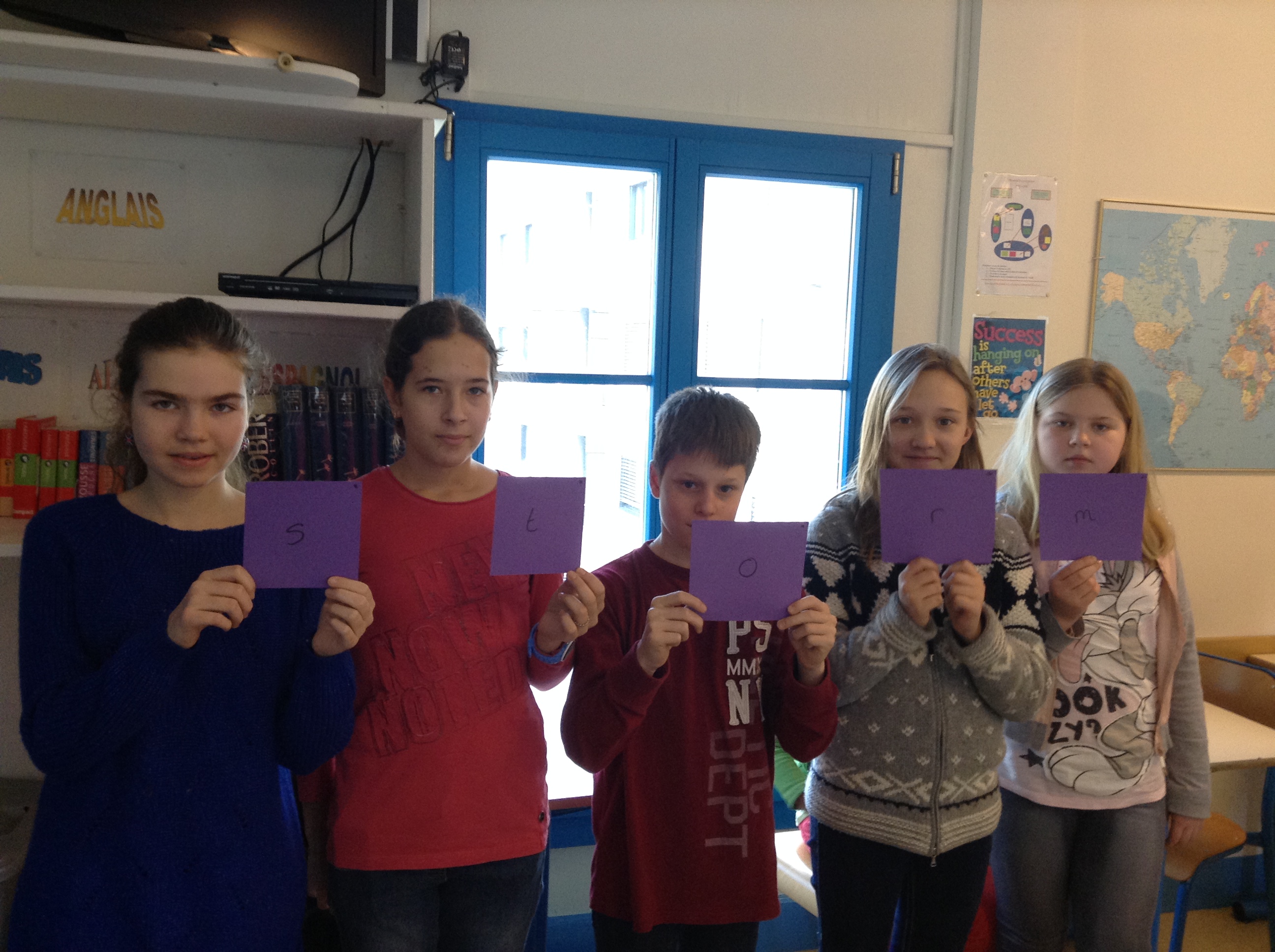
Practice vocabulary with a word train, give them the letters and get them to organise themselves into the right order, a great way of watching group dynamics and learning to work together:

photo (7)


Don’t forget if your pupils are camera shy (or their parents haven’t signed the use of image document) diplomatic holding of the card is a great way of hiding them but still involving them in the class!

photo (6)

Posted in Fab ideas | Leave a comment

Observations on observation

Today I watched a Maths lesson given by a colleague.

I now nothing about Maths or teaching Maths and it was my first “out of subject” observation so I was interested to see what I would learn from the experience.

It was GREAT! My colleague is a very energetic upbeat kind of guy so I was expecting a lively lesson, and I wasn’t disappointed.

What impressed me the most was his effortless differentiation. From the start he explained the objectives and offered different exercises to some students, later he explained in different ways ( great for dealing with the different learning styles) and as he did so I could sense some students “staying” with him, while others wandered off on their own in the exercises we were looking at.

I’m jealous because this is one thing I find difficult do attain without seeming to say “you clever ones do this and you….”

He also constantly referred back to previous lessons, while also reaffirming the relevence of today’s class by mentioning where it would fit in future work schemes.

I don’t get the impression I do this enough, in fact I’m not sure how to go about it. Sometimes my lessons and units of work feel more like the following:

prepositions – tick

present perfect – tick

etc.

Finally, he even taught me some Maths!

Last week my German colleague came to observe my class. She completed a form on teacher-pupil interaction that I drew up based on one in Wajnryb.

While I was aware that some pupils participated much more than others I also thought that I made sure that everyone joined in at least once or twice in every lesson.

However this observation made it quite clear that there was a central core of participants and the rest had mainly spectator roles.

I was therefore interested to read Somogyi-Toth on the subject of teachers’ action zones, the area where most participation and interaction occurs. I know in my class (as in the majority of classrooms) this is centre to centre right.

What I found fascinating was the suggestion that some students actively chose to sit in this area. Logical really if you think that the others choose the peripheral seats then those in the middle are there through choice as well.

I found this especially interesting when looking at my own action zone. While it is mostly made up of pupils who participate non stop, there is one pupil who never actively participates, although he does answer my questions without problems. Why is he here? Does he just need the reassurance of being asked before he can participate?

Finally I discovered in this article that girls, brighter pupils and students with easy to remember names also participate more, a case of self -fulfilling prophecies?

References

Wajnrb, R. (2005) Classroom Observation tasks, Cambridge, Cambridge University Press

Richard,J.C. and Lockhart, C. (1994) Reflective teaching in Second Language Classrooms, Cambridge, Cambridge University Press

Somogyi-Toth, K. (2012) Observation tasks a workbook for student teachers, accompanying an article in The Teacher Trainer journal, p. 7, volume 26, number 3.


Posted in teaching journal | Leave a comment

Do I have to teach grammar for them to learn grammar?

I experienced two “moments” while teaching this week, both related to teaching grammar.

In the first class the present perfect +ing was introduced in a text about music. I asked the pupils who played an instrument and elicited a few phrases to write on the board, along the lines of “John has been playing the piano for 6 years”. We touched on the difference between “for” and “since” and I may have briefly compared these phrases with ” Jane played the piano for two years”.

I told the pupils they would be tested on this later, to read the grammar explanation I gave them.

Then I bottled out, threw a few exercises at them and told them to do them at home if they wanted.

To make things worse, I didn’t even photocopy the right exercises the first time, and gave some on past perfect +ing, just to make things even more confusing.

Looking back on this lesson I can see that I only did half my job if that, why?

With another class we looked at quantifiers, much, many, (a) few, (a) little. This is relatively simple and often a case of working out the rules concerning count and uncount nouns.

For this reason I gave a “grammar sheet” with gaps for the pupils to fill in the rules themselves and let them get on with it.

Cue vacant stares, picking of finger nails and a bit of doodling.

I could tell they were just waiting for me to correct the work with them so they could fill in the correct answers directly without making a mess of their sheets, or more importantly, without having to think.

That’s why I told them that I would not be correcting this and that they would be tested on it next week.

So now I am stuck with two classe who have tests coming up on grammar points that I’m not sure they have grasped. The students feel unsure because I haven’t done the normal teacher thing ” here is the correct answer, learn it”. This is normal I suppose, but irritating, I do try to encourage my students to think for themselves and learn in a more independent manner, but French secondary school is not the ideal place for that.

The scary thing is that this situation also makes me unsure and uncomfortable. Is it fair to test them without directly teaching something first? Do I have to teach the grammar in the traditional way?

These situations have made me reflect on my beliefs about teaching grammar. I now realize my awkward feelings are because I’m not comfortable with what is perceived, by pupils, parents, and many colleagues as the “normal” wway of teaching grammar. I prefer a more communicative approach, if I had my way we would never “do grammar”. I can’t abide the phrase, it makes no sense, how can you “do” the present?

However, I teach in a secondary school system where the pupils are expected (and expect)  to be marked weekly and these marks (out of 20) determine whether they pass into the next school year in June ( 12/20 needed in our school).

This has also made me realize, that while I openly prone a communicative approach ( look I did it just a couple of lines ago and I’m repeating it again already,) I’m actually influenced by the way I learnt at school, and how I have seen so many colleagues teach various subjects in the secondary school system. If so many teachers teach that way, “my” way can’t be right, or can it?

I need to find a compromise, a way to help the pupils acquire the necessary language and skills to do what is required to jump through the hoops  pass the tests I mean.

I need to find the third way of teaching grammar so to speak. Although what I really need to do before I do that is to reassure my students, and help them accept that making mistakes is ok, that it’s the best way to learn, except in tests of course where it can cost you bigtime.

I also need to assure myself, that “my” way is the best way that I can help my students learn English.
Posted in teaching journal | Tagged , , | 1 Comment

Being bleargh

Although I’m supposed to be reflecting on action, in action and for action, I appear to have had a job reflecting anywhere near action at all this week, it has just flown by.

When I finally pause for breathe and try to drag the barest memories of this week’s lessons from the depths of my mind, it’s hard to remember what I have actually taught.

Thinking about it in more detail this seems to be because I don’t really feel I’ve taught much this week.

Most classes had at least one test, that’s an hour of watching them sweat and huff over grammar exercises and writing tasks while I tackle the marking from the previous class.

Then we have the “give-back-the-test” lesson. I try to vary the way we correct it, we take it in turns reading out the answers, I read all the answers, try and correct your own before working with your neighbour – this one always ends up as “wait ’til the teacher’s back is turned and grab the test of the best pupil in arm’s length and copy their answers”. However we do it, it doesn’t feel much like teaching, or learning more to the point.

Then we have the “teacher speaking L1 to explain the upcoming Cambridge Young Learner & Trinity GESE exams” lesson.

We also had a “pull the title from a hat” for the upcoming presentation for the 4èmes.

The 3èmes got a slightly different version of this lesson, involving a five minute presentation on Leonard Cohen’s “Hallelujah” (vastly superior to Jeff Buckley’s imho, I do quite like Bon Jovi’s version though, I digress). The point of this was to model what I wanted for their next oral presentation next week.

I haven’t even mentioned the homework checking & “has everyone got their books” waste of time.

All of this is necessary I suppose, but  it doesn’t really feel like I’m doing my job, it’s frustrating and without that buzz from giving a successful lesson I feel bleargh.

in fact I feel more like a chef in a restaurant who ends up doing the washing up,  very bleargh.


Posted in teaching journal | Tagged | Leave a comment

Take your students on a tour of the white house

whitehouse

In our coursebook we have a reading comprehension on the White house.

While vaguely interesting, to me more than my 12 year-old pupils, it is a bit flat to say the least.

So this time I wizzed up the class by sending the pupils on a virtual tour/treasure hunt, with clues to help them find the rooms they needed to go in to find the information they needed in order to answer the questions I had set.

A fun lesson that got us thinking about the children who have lived in the white house, a follow up lesson in the making?


Posted in teaching journal | Tagged , , | Leave a comment

App of the week #2

photo (3)

This app came in really handy this week as the younger pupils were learning about animals and the 3èmes about music and instruments.

In the free version you get exactly that, whereas for a couple of euros more yu get transport, birds, household noises ( we had great fun getting the loo to flush in the staffroom!) and more.

It adds the essential game element and makes a nice change from flashcards, “which instrument makes this noise?”…

Posted in geekicity | Leave a comment

Fab idea #2

photo (5)


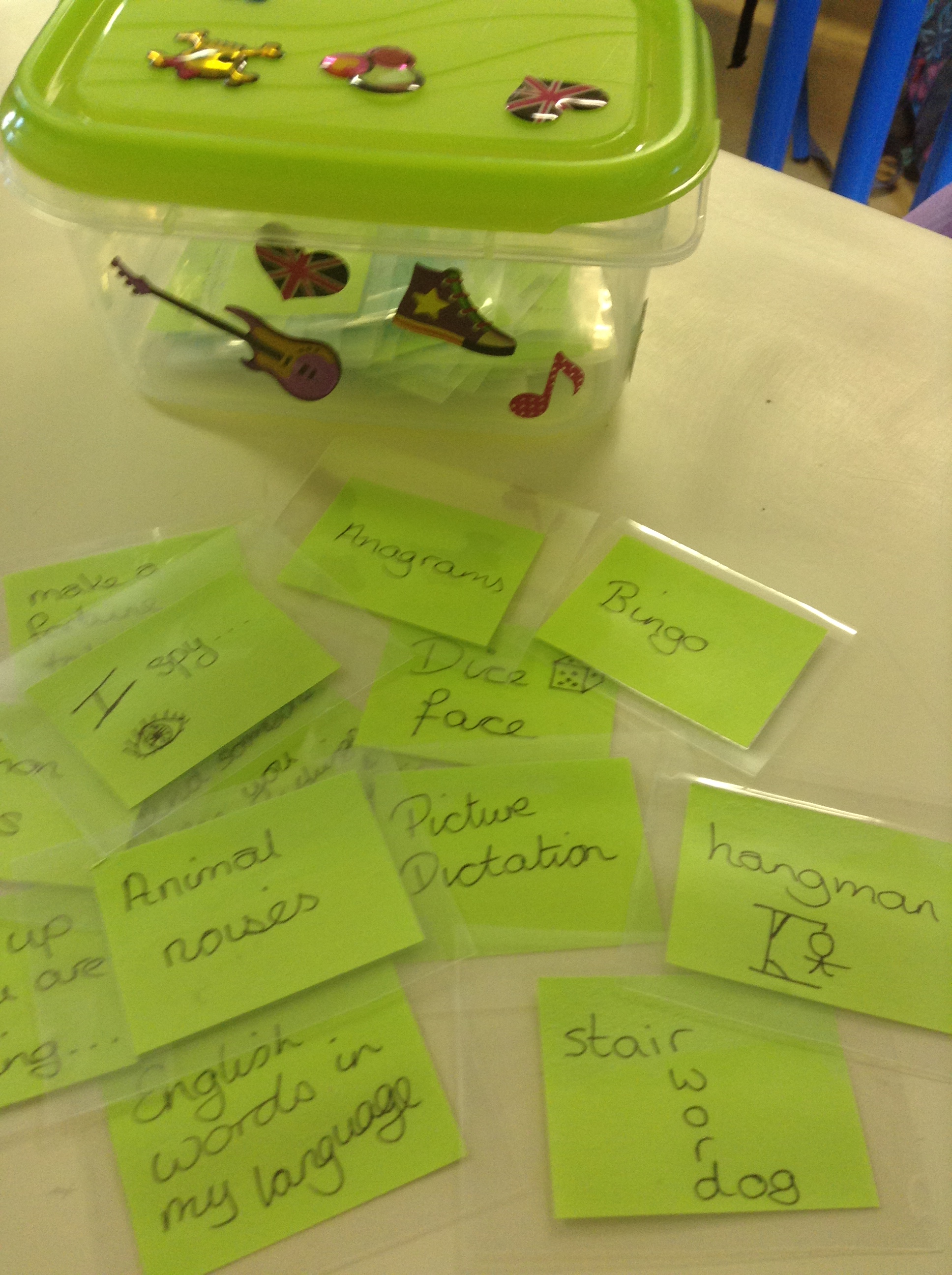
For those days you just want to play games or when you don’t want to start something new at the end of a lesson;  just write some ideas on post-its, laminate them (everything looks better when laminated) and put them in a box (everything is more fun when the pupils get to pick something out of a box!)

Games include:

Hangman, Mime the action, guess the animal noise, picture dictation, my neighbour’s cat,  decribe the word,  pictionary, taboo, etc.

Change the games often enough to keep interests, put the kids into teams but change them if it becomes obvious someone is going to look like a total loser.

Or Friday class just flew by.


Posted in Fab ideas, Friday classes | Tagged , , | Leave a comment

It makes me mad when…

20140107-192107.jpg

I spend (relatively) ages thinking of a fun way to introduce the passive and my pupils just won’t play ball.

For some reason my pupils always seem to find the passive challenging ( answers on a postcard please), even though some of them are far from active themselves!

So this time I thought long and hard about a lure, a hook, to grab their interest.

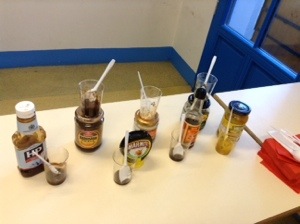
A good look in the fridge gave me the solution. I organised a tasting of a few of my favourite relishes and a worksheet to fill in, ” I think it is made of… I would eat it with… After this part we would chat about their favourite sauces, and I would subtly move the conversation to asking what they liked on pancakes, enabling me to use the text on maple syrup from the course book to help them “notice” the passive.

Fantastic, I thought. Which is probably why I was so miffed when five of the girls just refused to taste anything. I admit the marmite wasn’t particularly appetising but even so.

I was actually quite surprised to see how annoyed I was about it, after all my pupils aren’t always leaping with enthusiasm. Thinking about it afterwards I finally saw their point of view, not everyone is going to want to blind test some funny looking (and smelling sauces). It was a shock to realise how I hadn’t thought of things from their side at all during the class. Also the pupils don’t have any idea of what goes into lesson prep, nor should they, so I mustn’t blame them for what I saw as their ingratitude.

Fortunately I gave the same lesson to another class of the same level later in the day. This time when I set up the activity I immediately offered an alternative activity to those who didn’t want to participate, although I made sure it was much more boring, I’m not that nice!

Has anything surprised you by making you mad when you weren’t expecting it to?

Posted in teaching journal, Uncategorized | Tagged , | 1 Comment

Is thinking working?

It’s the first lesson back after the holidays, 8:15 – 9:05a.m.

It’s the troisième – 20 odd fifteen year olds.

As anticipated a quarter of them were absent.

Not wanting to spend the whole lesson writing ( -we only have three lessons a week and I feel a bit useless sitting there watching them write so it’s usually oral in class and writing for homework), we do an all singing, all dancing oral activitiy first.

OK, it’s more all mumbling, all shuffling, but I do get them up, in two lines, changing partners every 2 minutes.

Now for the writing activity, I’m very excited about this because we’ve just joined the 100 Word Challenge.

Obviously I’m more excited than the students, but I know they love my buzzy lessons deep (deep) down.

I explain the challenge, give them this week’s prompt, and let them get on with it.

A couple start writng, nobody actually starts snoring, I wait…

…and wait…

After five or ten minutes I ask what their story will be about, a few answers, a few questions about vocabulary and style. (“Can we write it in the past?” “Can it be fiction?”)

A good percentage however respond with “I’m thinking”.

Hence my question, I know that real thinking is real working of course, but how do I know they’re really thinking, and about the subject not about how much they wish they were still in bed? It’s easy to see working when they are doing oral activities, or writing, doing listening comprehension, etc.

The last fifteen minutes of class was spent this way, with the work to be handed in next lesson.

Was this a waste of time?

Were they really thinking?

Does it really matter if they were thinking or not as long as they hand the work in completed next lesson?

Surely a breather on the first morning back with a whole day of lessons ahead of them won’t do them any harm.

Or do I just want to be in control all the time?

I’m so aware that there are so many great things we could be doing in class that I never want to waste a minute, but actually I’m not sure if trying to force feed learning every minute of the class is the most efficient way to do things ( images of foie gras and geese spring to mind).

Perhaps I should just let go a little more often and leave more time for thinking.

Posted in teaching journal | Tagged , , , | 3 Comments

App of the week #1

This week’s apps are about image, after all a lot of my pupils think that’s what counts.

First, Sketch;

Image (1)

as its name suggests it turn your photos into sketches.

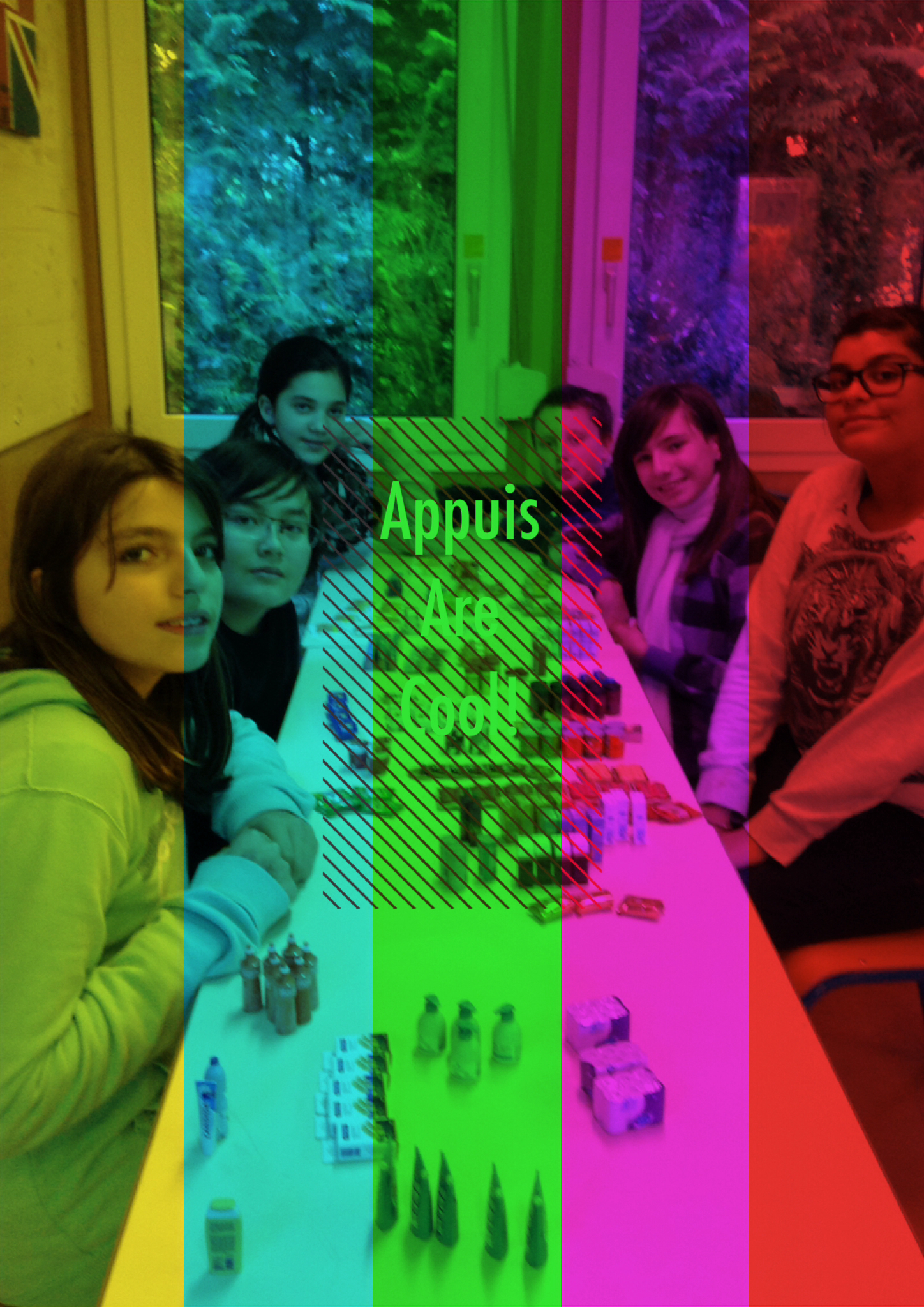
Phoster is a poster-creation app, fantastic as I love putting up posters to motivate my pupils. I don’t have my own room so I squat any spare wall space I find, including corridors and dining hall.

The problem with displays is that after a few days we become blind to them, so I’m looking forward to regularly producing new ones with this app, and more to the point – getting pupils to do it for me!

Image (3)

Text on photos is fun too, now I just have to take some arresting images to grab their attention;

Image (5)

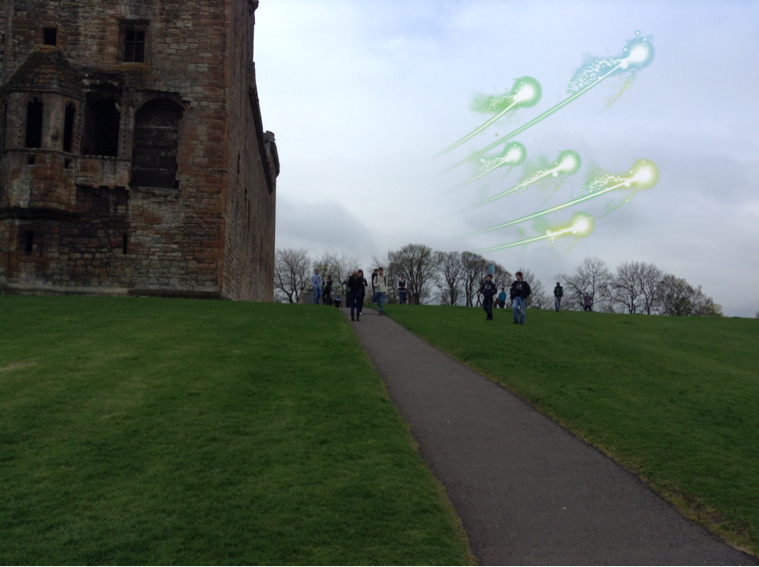
I’ve had great fun messing about with Light Effects too;

Image (7)

So playing about is the first step, now to use them  in class. The phoster poster will be up to advertise this week’s Friday classes. The Music Matters will keep the 3èmes (year 10) focused on this week’s theme.

I just need to find something to do with the shooting stars!


Posted in geekicity | Tagged , , | Leave a comment