Looking Forward to IATEFL

So here we are with a week to go, what am I looking forward to?

1. Buzz & Motivation

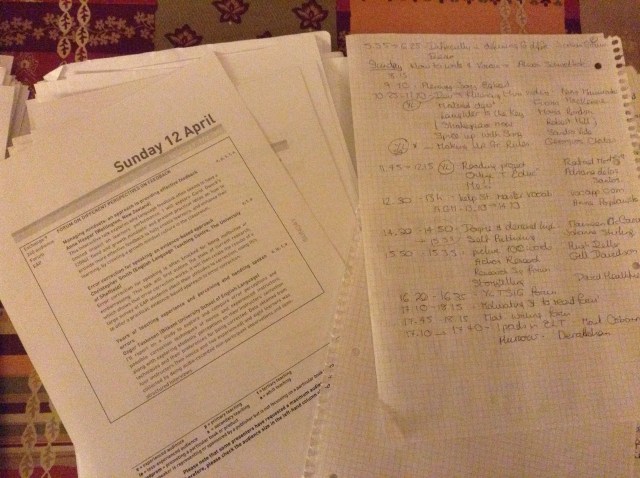
Although it’s a bit full on I just love the buzz I get from conferences, and IATEFL is the king of all conferences, I like the fizzle in my brain as I learn new ways of improving my teaching.

2. Meeting Folk

I’m really looking forward to seeing some of the people I follow in the blogosphere or on twitter, such as the wonderful Vicky LorasHugh Dellar,David Heathfield, to name but a sprinkling of talent that will be present.

3. Going to the UK – alone

This is nothing to do with TEFL, but I still get a buzz of travelling alone, being able to drink hot drinks on planes and only having to carry my own bag! I’m looking forward to squeezing in a bit of shopping (I am a girl after all!) and a trip to specsavers, where I’ll quite happily pay to avoid the six month waiting list to visit an ophthalmologist here in France.

4. Food

While on the subject of the UK, I can’t wait to get my fill of breakfasts and chocolate covered shortbread, and don’t get me started on Cadbury’s, I swear if I lived in Britain I’d be the size of my house, which is why number 5. will be great too…

5. Running

This year I’m taking my trainers (again!) but will definitely use them, hopefully to go running with likeminded participants who can join me at #IATEFL2015runners

So all I have to do now is choose which workshops I’ll go to! More on that soon!

Posted in Conferences | Tagged , , , | Leave a comment

A fun activity on a Sunny Day


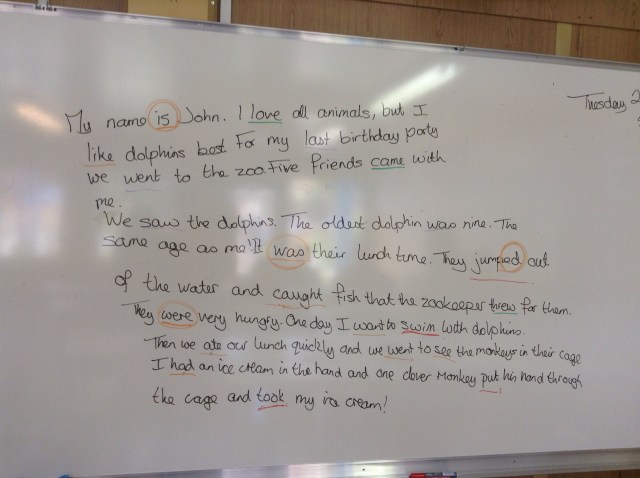
I took advantage of a sunny to day to present the past tense in a slightly different way.

By putting the text on a bench we created the perfect way to advantage of the spring sunshine. The students took it in turns to run outside and remember bits of the text to dictate to their partners.

When they had finished we wrote up and corrected a class version of this running dictation.


Then I gave them all a pen to underline the verbs,

Voilà! The past tense!

Posted in Fab YL ideas | Leave a comment

A counting game

Do you play this game with your students?

Standing or sitting in a circle each student says either one or two numbers that follow on from each other from 1 to 10, the one who says “ten” is out, so think carefully about whether to say one or two numbers, who will you get “out” and will you avoid illumination yourself?

Posted in Fab ideas | Leave a comment

3 before Me – Developing learner autonomy in YL & teens

Teaching this age group usually means groups classes and learner autonomy is essential, not only to increase learning, which in turn promotes good classroom management, but also to ensure teacher sanity at the end of class! In this post we’ll look at the whys and hows of learner autonomy, and we will discuss the “three before me rule” in more detail.

Why?

This may seem like a no-brainer , obviously I want my students to look up the word they need rather than sit there waiting for me to do it. Learner autonomy means the class can get on with the set work and free the teacher for the students who really need help.

However it goes further than that. Developing an autonomous classroom will foster group motivation, the class that works together plays together and helping each other will favour this. Encouraging autonomous learning will also enable your students to work better at home, therefore improving their overall level. By working this way in English class they will be able to transfer these skills into other school subjects and even their home life – my primary partner also uses “3 before me” and I encourage my children to do the same. By finding out independently children are developing not only their curiosity but they will also get into the habit of going one step further; when looking up a word in a dictionary they’ll probably glance at the words above and below, when reading a Wikipedia entry they may well click on the hyperlink, this promotes learning for its own sake – a great skill to have in this day and age.

Finally, as we all know, there is more value attached to tasks we have undertaken ourselves, discoveries made independently will be more valued, the child’s self-confidence increases and of course children learn better what they discover for themselves.

How?

The first thing to know about developing autonomy in your class is that it takes time, just as with bringing up your own children, it can seem harder in the short-term to develop the behavior you wish to see, you must be consistent, give in to demands one day and you put yourself back, not permanently, but still you will have to catch up that lost autonomy, however, as with parenting, the long-term benefits should pay off.

Get a routine – just like at home, young people need the sense of security that rituals bring, this means that they must bring the same things to class every time, (in my case, pen, paper and books). Also by starting the class in the same way every day (asking for the date, weather, last lesson’s vocab…) you will not only create a learning environment but will avoid having your desk surrounded by a pile of people who’ve forgotten something. Then, and only then, should you answer questions, and the answer to most of them is usually “and what is your solution?” Make it clear that anyone who does not have the necessary material to work can’t do the classwork (and then give them boring written exercises while the rest of the class do some fun, walking around oral game) they will quickly find the solution of sharing a book etc. After the first lesson or so expect them to put their hands up to tell you the solution, not the problem, if possible of course.

Other routines are easy and fun to establish. With at least twenty students per class, it’s easy to waste time handing out worksheets, I place a pile at the end of every row, or on each cluster-table and then time the students, I expect everyone to be holding up their sheet in about 17 seconds believe me it can be done, especially of the first row to execute can leave first at the end of class!

Welcome failure and mistakes – this is essential in fostering independence, why would a child try and risk being punished or humiliated if they get it wrong when if they wait and get someone else to do it they won’t? Be sure to make a big deal about effort and the methods students use to get round problems, constantly reminding them that he who dares, wins.

Three before me – If you don’t already know and use this is very simple technique, then the idea is that students must try at least three ways to find the information they need before asking the teacher, loads of posters of this are available on the internet, plaster your classroom walls with them and point at them when necessary.

I call it B.B.B. but it’s the same thing; before asking the teacher, use your Brain – where have you seen this word before? is it a noun or a verb? Is there a known word hidden within it? Like “friendship” for example. After a little brainwork, try a Book, most course books have a lexical section, if not there’s a wonderful book full of English words on the shelf in the corner, that’s right – the dictionary. Of course in today’s classroom “book” may mean any device that will do the job. Once they’ve found the word then why not get them to write it on the board to tell their mates? They can write the translation alongside, or if you insist on a L2 only classroom get them to draw a picture or write a phrase with the word in it, even if this doesn’t explain the item satisfactorily, then at least the rest of the class will know that someone has found the answer, and they can ask him in step 3. Finally Buddy, ask your neighbour, not only will he feel good for being able to help out but also research has shown that many students learn better from peers than from their teachers anyway.

An even simpler method is to reply “I don’t know” to every question you are asked, and pretend to be busy doing something else. As long as students know they can’t get away with doing nothing then they’ll find a means to their way. What is clear is that the more effort they make to find an answer, the more chance there is of them remembering it.

Accept agitation– this is the downside, but mayhem is not inevitable. There will be more noise and movement in your classroom, while students getting up to fetch dictionaries, writing on the board or asking a friend something, however as the teacher now is now available to keep an eye out for anyone that’s off task (as opposed to answering the same question four times in a row) this is not such a problematic issue anymore.

As with much good classroom management, these ideas take time to put into place, but quickly pay back in terms of learning, atmosphere, and especially student motivation.
Posted in classroom management tips | Leave a comment

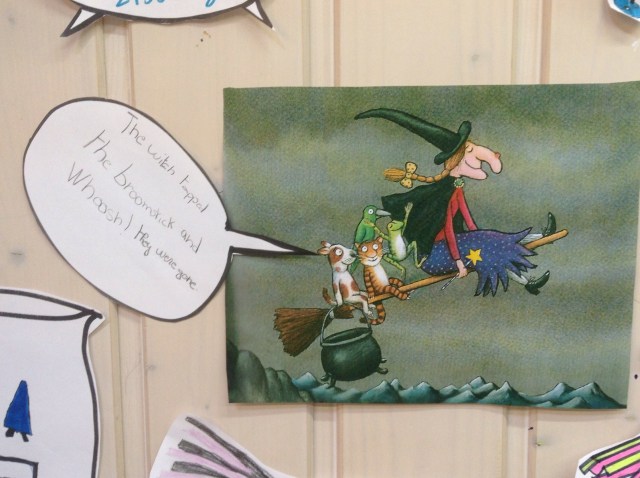
Is there Room on the Broom for a class like us?

I just love doing projects on stories that I used to read to my own children, after “the smartest giant in town” and “the gruffalo” we’ve been reading another of my favourites.

The students love predicting what is going to happen, with a bit of thought you can really create suspense when reading stories in class.

Not only is it the opportunity to learn vocabulary, the rhyming lilt of these stories encourages the students to learn language chunks (they still chant “goodbye little mouse” when I leave their class).

The students particularly appreciate the opportunity to show their own creativity after working on the story, here they created their own spells and brooms, which were indeed “truly magnificent”.

Posted in Fab ideas | Leave a comment

A fun way to revise history

We’ve been studying USA history in our English class and this way of revising ticks all the boxes as far as I’m concerned:

– group work but each individual is accountable for their work

– seeing and using in action the language we’ve been studying

– getting out of that seat and moving about

Posted in Fab ideas, geekicity | Tagged , , , | Leave a comment

Playing to Learn

IMG_2566 We all know that games are a great way to learn and to motivate students, and I recently had was the prefect opportunity to test a lot of the games I use.

I’ve already mentioned our Friday classes here, they are the occasion to give extra lessons to those who need them or who ask for them. It has to be pretty motivating to get a student to stay at school an extra hour or two instead of going home at the end of a long week.

Instead of offering revision exercises, I got twenty-two volunteers willing to test and give their opinions on a variety of games, not bad I think!

They played a variety if games in groups, after completion or after a set time they wrote their opinions and moved on to another game. The games we played were  RoundtripSchubitrix English dominoes, Brain box world, StoryonicsTalking Dice, and English Paperchase, which you can see below.

Paperchase was probably the most popular overall, the students loved the speed and challenge, they also said they liked learning about English life, personally I think they also enjoyed the movement and the chance to stand up a bit in the classroom.

IMG_2568

Actually the “game” they enjoyed the most wasn’t really a game at all. A local supermarket recently ran a promotion campaign where it offered miniatures of its products, I’d asked friends and colleagues to collect them for me.

The students loved playing with these little objects, I started them playing “shop”, asking for ” a few…” or “a little…” – spot the teacher!

IMG_2567

However they soon took over and invented other games, hiding the objects in their hands and making their partner guess for example.

The hardest games according to my students were those that involved creating stories using the dice or storytronics cards. They preferred games with an aspect of challenge, a possible winner and loser.

A lot of the games I use are not specifically designed for ELT students, for example brainbox, but the students still love playing them.

Anything that gives them a challenge, and has a clear solution makes happy students, and anything that gets them speaking English makes me a happy teacher, the perfect way to end the week!

Posted in Fab ideas, Friday classes | Tagged , , | Leave a comment

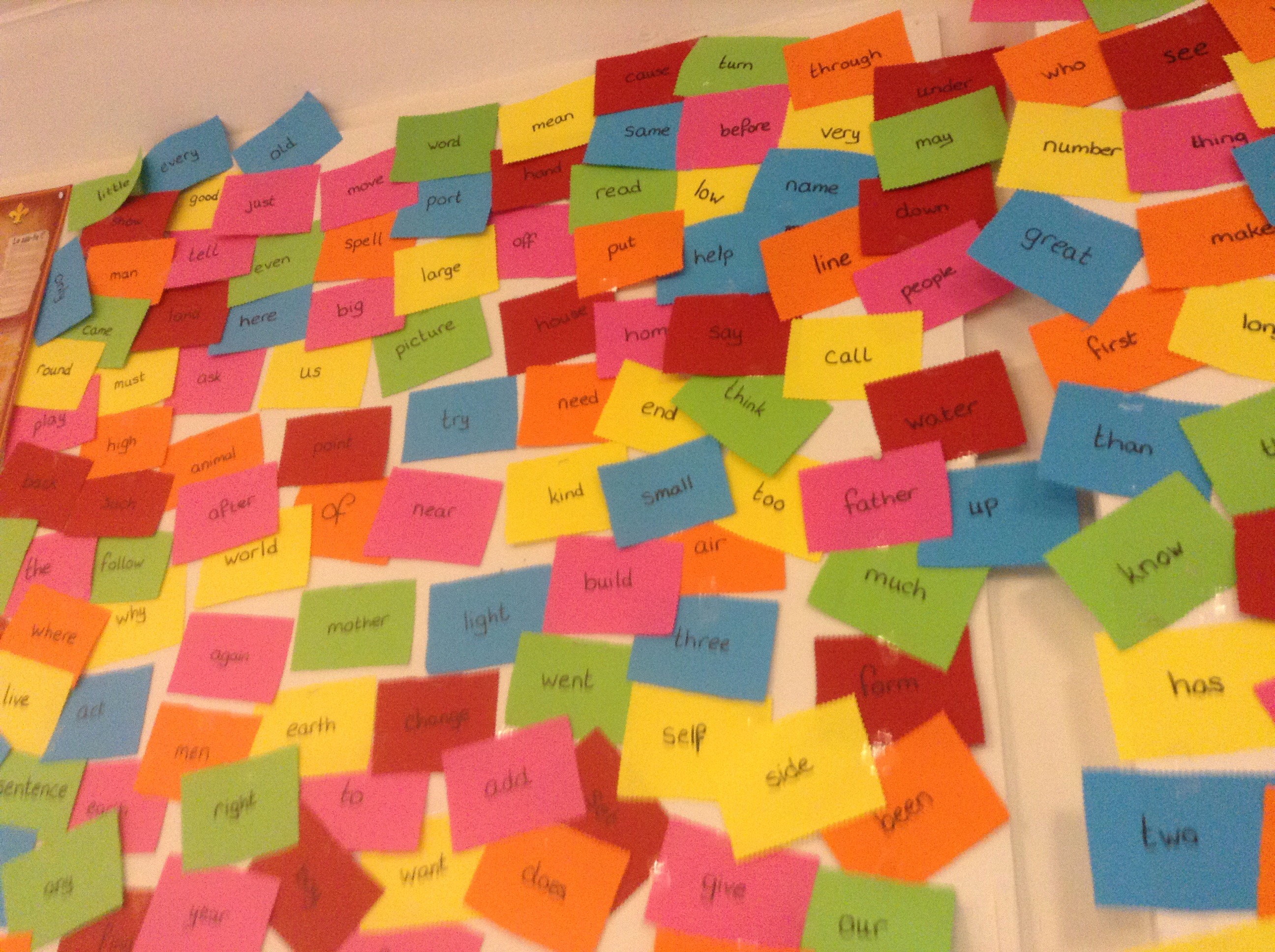
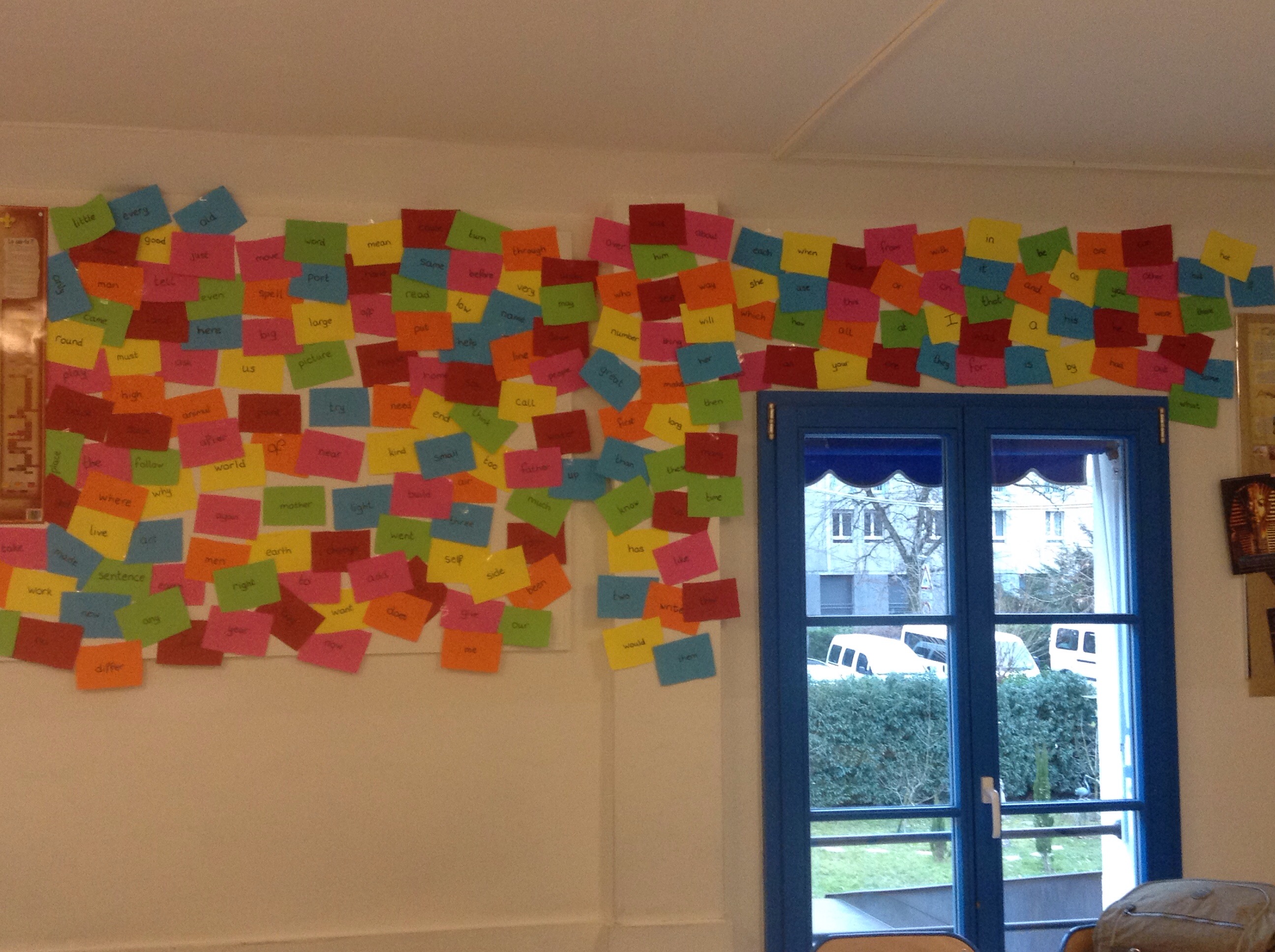
A Word Wall

I’ve wanted to do this for ages and finally had time during the holidays.

IMG_2556

IMG_2558
What do you think of the results?

Posted in Uncategorized | 4 Comments

Response-abilty

I interviewed Herbert Puchta at the recent ETAS AGM and one of the things he said was, … I’m sorry, I’ll repeat that in case you weren’t paying attention – I INTERVIEWED HERBERT PUCHTA, aren’t I lucky?!! This is the kind of advantages I get for being part of the wonderful ETAS organization (I’m the new Teen SIG coordinator, but I’ll try not to brag!)

Anyway, back to the story, Mr Puchta (or dare I say, Herbert?) talked about the response-ablility of students and teachers in the classroom. Now, maybe this has always been evident to you, but I have never made the link between responsibility and response-ability.

When you think about it, it seems obvious, especially in a EFL classroom, I have various responsibilities, of both a pedagogic and organisational nature, and of course students have responsibilities as well.

Both sides also have response-abilty, the abilty, and even the obligation to respond to the other, not simply by answering questions, but also by answering needs.

It is my duty as a teacher to respond to the mood of my class, as well that of individual students, to respond to gaps in their knowledge, to current events, to so many things.

Thanks to Herbert Puchta it became clear to me that a good teacher not only has responsibility, but also response-abilty, and it is our duty to use this ability.

Posted in Uncategorized | Tagged , , | Leave a comment

A workshop review – Marie Delaney: Dyslexia – a problem or a gift?

Despite having given my own workshop on dyslexia I was keen to here what others had to say on the subject as I am far from an expert on the subject, in fact the more I study dyslexia and other learning difficulties (for want of a better “label”), the more I wonder how it could ever be possible to declare oneself an expert on such a complex question. Marie however obviously has an immense amount of experience in working with people with SEN. Recently on twitter I got my wrist slapped for referring to someone as “dyslexic” and I am well aware, as Marie pointed out, of the danger of labelling people. Every student has different needs and abilities, however it is very difficult to write a review on a workshop of this kind without lapsing into some “stereotypical” labels, if only to save space, so please excuse me. Marie referred to learning differences as opposed to learning difficulties, and encouraged teachers to get to know their students needs and abilities, to ask the student to tell you how they learn and what difficulties they encounter, rather than jumping to conclusions. She also emphasized the importance of teachers trusting their intuition more in these cases, and she said something that I have found to be the case often in my classes – that in fact the strategies that help SEN students which actually be off benefit to all the students in the class. Marie talked about the gift of dyslexia : citing a tendency towards holistic, “out of the box” thinking. I must also mention that I got slapped on the wrist for saying a similar thing in my workshop notes, critics pointed out, quite rightly, that this was also labeling, and that not all dyslexic students were creative and holistic, and calling them such just made those that weren’t feel even worse, in a “you have reading/writing difficulties and you’re not even a creative start-up entrepreneur or scientist” way. I found questions such as “what happens in your head when…” “how did you learn/understand …” very interesting, , I wonder what my students will answer, because I’m not sure how I could explain what happens in my own head. Marie pointed out that although we complain that our students are not focused, it is in fact normal for our minds to wander and that we are always focused on something, just perhaps not the lesson in question, and that it is more useful to ask students how they can bring their attention back to the task at hand rather than berate them. Marie used a mind map to remind us that certain students prefer to see the whole picture first, rather than learn in a linear way, we tend to teach in the same manner as we were taught ourselves and must be aware of different styles that may be more adapted to our students. The following slide gave us an idea of some of the difficulties that learners can face, IMG_2069 as participants we didn’t actually find all the activities simple, when finding the missing letters I didn’t spot them all, nor did my neighbor, but interestingly, she hadn’t missed the same ones as me, proof if needed that indeed, no two people see things the same way. Not all students who are staring out of the window are daydreaming, and even if they are it maybe with some topic related to the lesson, and they may in fact be learning through visualization. Being called “lazy” won’t help any student, whatever their learning differences, and should be avoided at all costs (tempting as it sometimes is for the teacher!). Despite the differences, Marie did give a general definition of dyslexia as well as some common indicators which was useful as it can be easy to forget that difficulties in organization or timekeeping for example may be related to dyslexia, and that although we may take into account reading and writing difficulties we should also be a little more understanding with peripheral aspects of dyslexia. I entirely agree with Marie when she talked about the main problem being one of self-esteem and she showed us a very powerful technique to develop confidence: Complete the following phrases- When I feel good and confident that’s like… And that feels like… Draw a representation of these answers and keep them at hand, to be looked at before tests or when you feel nervous etc. All of this was really interesting even though a lot of it reiterated what I had read before, however it left little time for the practical activities that Marie suggested, such as: IMG_2081 A great activity that I’ll definitely be using was using a length of string as a visual timeline and asking students to represent phrases or verbs and stand in their “correct” place along the line. On the whole this was a great workshop, maybe too much theory and not enough practical ideas for some participants- although not myself I must say, time flew by and I wish Marie could have talked longer on a subject that she obviously knows a lot about, and is passionate about.

Posted in Uncategorized | Tagged , , | Leave a comment