
How to learn Vocabulary – 7 simple ideas

words1

(image source – thedeconstruction.org)

Having posted about the advantages of vocab lists I thought it would make sense to give some strategies to learn them.

1. SEVEN x SEVEN

Research show that you must see/use a word seven times in seven ways to learn it.

2.SPACING

The seven times should be spaced out, again research has shown that a lag of between 10-20% is most effective, this means to remember something for one week you should see it at times separated by 12/24 hours, if you want to remember it for five years you should review every 6/12 months.

3. RANDOM WORDS

I was quite surprised to find that students learn groups of random words better than topics such as the days of the week, or clothes. This avoids confusion. If you do want to use a theme, make it something like “a picnic” and include words about food, clothes, nature etc.

4. WORD CARDS

Despite the controversy around the use of L1 it seems that word cards with the translation on the back are  effective for learning vocab. Students should only make cards for words they don’t know, when they are confident that they know them, they should be put at the back of the pile or to one side, and tested occasionally.

5. TESTING

Testing, by look, cover, copy or any other method, is one of the most effective learning strategies, and easy to do with vocabulary.

6. NO PAIN NO GAIN

Discovering vocabulary in context, through a synonym or antonym, image or realia is more effective (but less reassuring!) than a simple translation.

7. GAMES

There are loads of vocabulary games, so vary them and use them frequently to encourage recycling:

-coffee pot (replace new word with the word coffee pot, “I coffee pot twice a week, I wear trainers to coffee pot, you coffee pot if you miss the bus” and guess)

– noughts and crosses ( draw two grids, one with new words, if students -in teams, use word correctly in phrase they choose where to place their 0 or x)

– write the word without vowels

There are of course hundreds of other methods, I’d be interesting in hearing your favourites.

Posted in Uncategorized | Leave a comment

In defence of vocab lists

Gosh, what a brave title, I can hear you all hissing from here.

Before you actually start spitting at your screen, hear me out.

Yes, I would love my students to learn English through communication activities and masses of comprehensible input.

However in the real world I teach in a continental secondary school where marks count, if students don’t get an annual grade point average of over 12/20 they won’t pass the year, they may get into another school but will probably have to redo the year. So points count.

When I arrived in this school the head told me I would be expected to give vocabulary list every week, followed by a test on said list a week later. I walked the walk, but secretly grumbled the talk.

Recently I’ve changed my mind, for the following reasons

– the students like them: they don’t always admit it, but they find them reassuring.

-they install learning strategies and regular work: by spending time talking about how to learn at the start of the year, the students develop techniques that they can use in other subjects, like it or not, continental education is still based on rote-learning so giving vocabulary lists encourages skills the students need at school.

-they reward work: some of my weaker students only pass the school year thanks to their vocab results. This may shock you, however their efforts merit this in my opinion.

-good results in vocab tests increase self-esteem and motivation: so often a new student tells me they “can”t learn English, that they are “rubbish”. A couple of weeks later they realise that even they can get an 18/20 and basically, that’s how I get them on my side. They are so proud of their result, and of the positive comments I give them. Also weak students tend to have low word recognition so these lists go part way to rectifying this.

– they are an easy “base” from which to do some fun activities, bingo, tell a story using the vocab words, describe a word, battleships, and this great activity that I stole borrowed from tefl geek.

– they are expected by parents.

So, these are some of the reasons I tow, what is quite an unpopular line in TEFL, what’s your opinion?

Posted in teaching journal | Tagged , , , , | 5 Comments

Spelling Practice and Word Recognition

2015/01/img_2478.jpg

Not only a good way to recycle vocabulary but a chance to stand up and move about a little!

Posted in Fab ideas | Leave a comment

Using BIG questions to start a topic

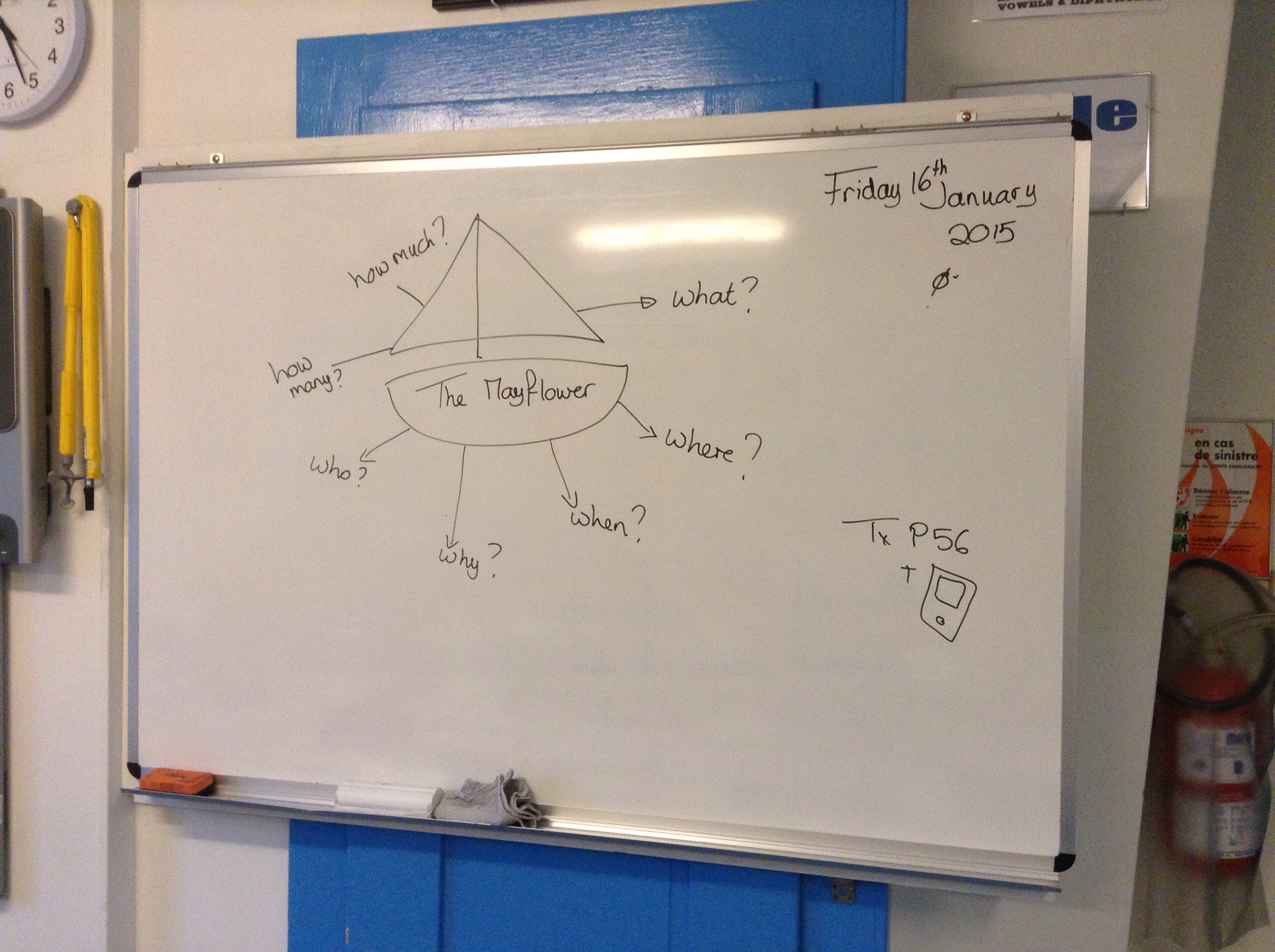
2015/01/img_2462.jpg

Students often find brainstorming a new topic difficult, they don’t know where to start. Giving them question words helps them form the questions they need to ask to gather information.
A clue on where to find information (textbook & mobile devices in this case) is also helpful.

Posted in Fab ideas | Leave a comment

The Student whisperer

The other day I wrote about the power of the bell that I use in class to get quiet and students’ attention.

Today however I’d like to draw your attention to the other end of the spectrum – silence and near silence.

Have you ever remained silent after a student has given an answer? See how uncomfortable it can make them, we all need acknowledgement to our comments. A little nod, or frown can reassure a student or encourage self-correction.

What is it about whispering? When a student hesitates, or can’t answer, whispering to them is a great way of scaffolding, and although it boils down to the same thing, it doesn’t feel like giving away the answer, at least not to them. It’s more encouraging and often they will naturally repeat you. Mouthing can have a similar effect.

For a change of pace, or at least volume, try getting the class to do pair works in whispers, my students love it!

With difficult students, try going up close to them and talking very quietly to them, rather than calling them out in front of the class, if they go off track again a gesture or shhh might do the trick.

While we are on the subject, what about gestures? One of the most common teaching techniques, you probably use hundreds without even realising it, think about when a student says “yesterday I go…” I bet you’re already pointing over your right shoulder! Last term I filmed myself teaching a few classes, (if you haven’t done this already then I highly recommend it, turn the camera to film you, not the class, it’s an amazingly eye-opening experience,) it was like watching Marcel Marceau in action!

Mimes are great for correction, organising pair work, dealing with classroom management issues, not only do they save your voice, but they enable you to save speaking English for positive and useful language.

Posted in classroom management tips, Fab ideas | Leave a comment

The Power of the Bell

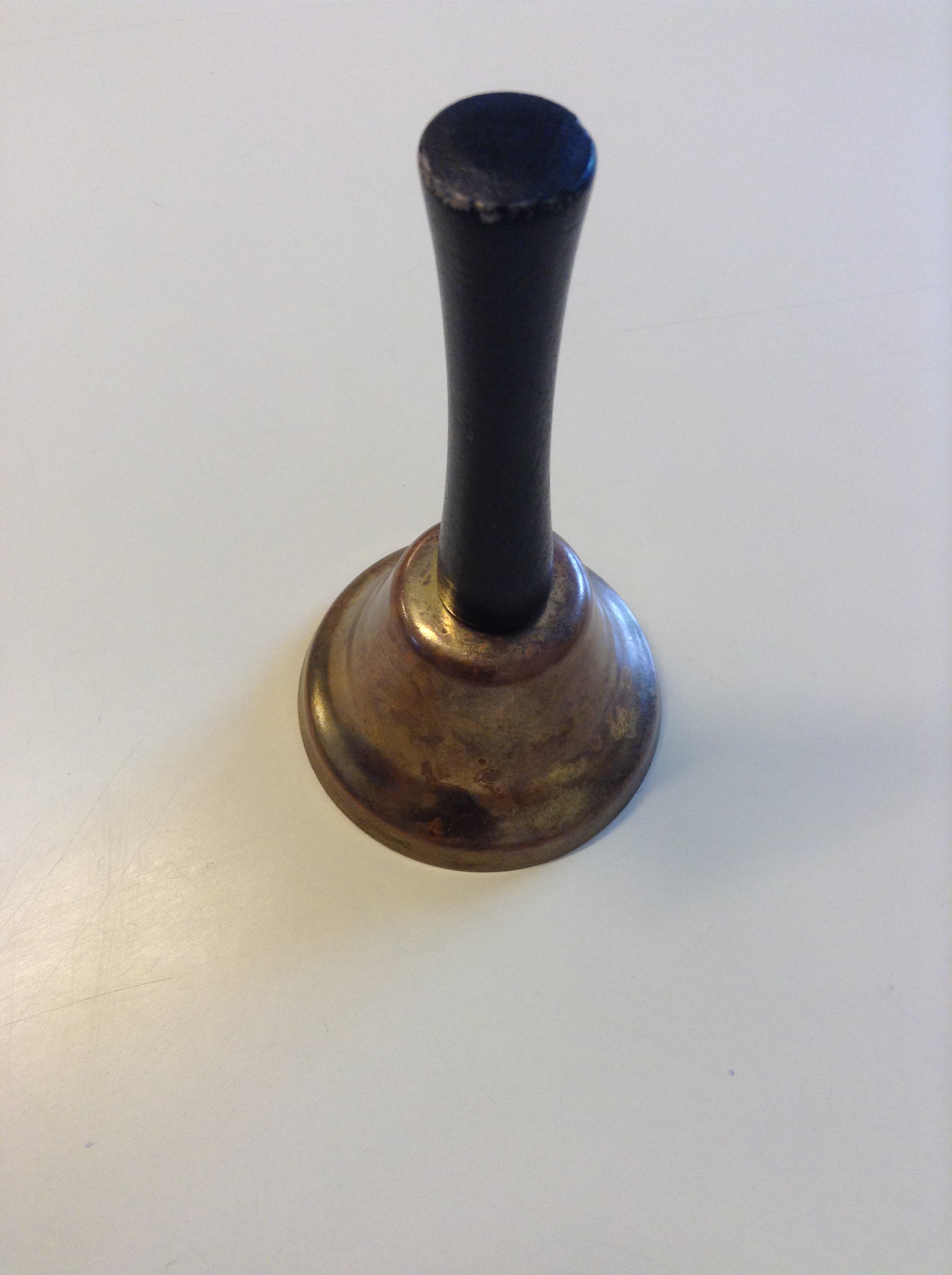
Meet one of the most powerful classroom management tools I possess:

IMG_2419

The Bell has many talents; the first and most obvious is to get the students’ attention, usually when I want to bring a pair or group oral activity to an end.

However its magical powers don’t stop there, it is also useful to stop talking in general.

It can be rung with great vigour when necessary, my students hate this, which surprises me as I find its clanging less annoying than the constant buzz of their chatting.

It can also be rung gently, sometimes gently at first, getting louder as they get quieter, or sometimes good clang or two to start, and then a little gentle glinging ( I like this word, do you?) while the students get back to their places.

Sometimes I give a little jingle if I hear L1 during an “English Only” exercise.

The main superpower of the Bell however is that, thanks to it, I don’t shout. This has quite a few advantages;

1. I never strain my voice or get a sore throat.

2. I don’t shout, shouting always sounds angry, and this stresses the students, and myself.

3. This is the best part – when I do shout IT MEANS I AM REALLY NOT VERY HAPPY and that gets  results very, very quickly.

If you teach YL, teens or even a large adult class then I really suggest you get some form of Bell, Carol Read uses a tambourine, I also have a mini whistle in my pencil case (that’s really ear-splitting!), find something that you are comfortable with.

Save your voice for something important, after all, it is your most important teaching tool.

Posted in Fab ideas | 1 Comment

Quick questionnaire

This idea is quick and simple and easy to adapt to just about any tense.
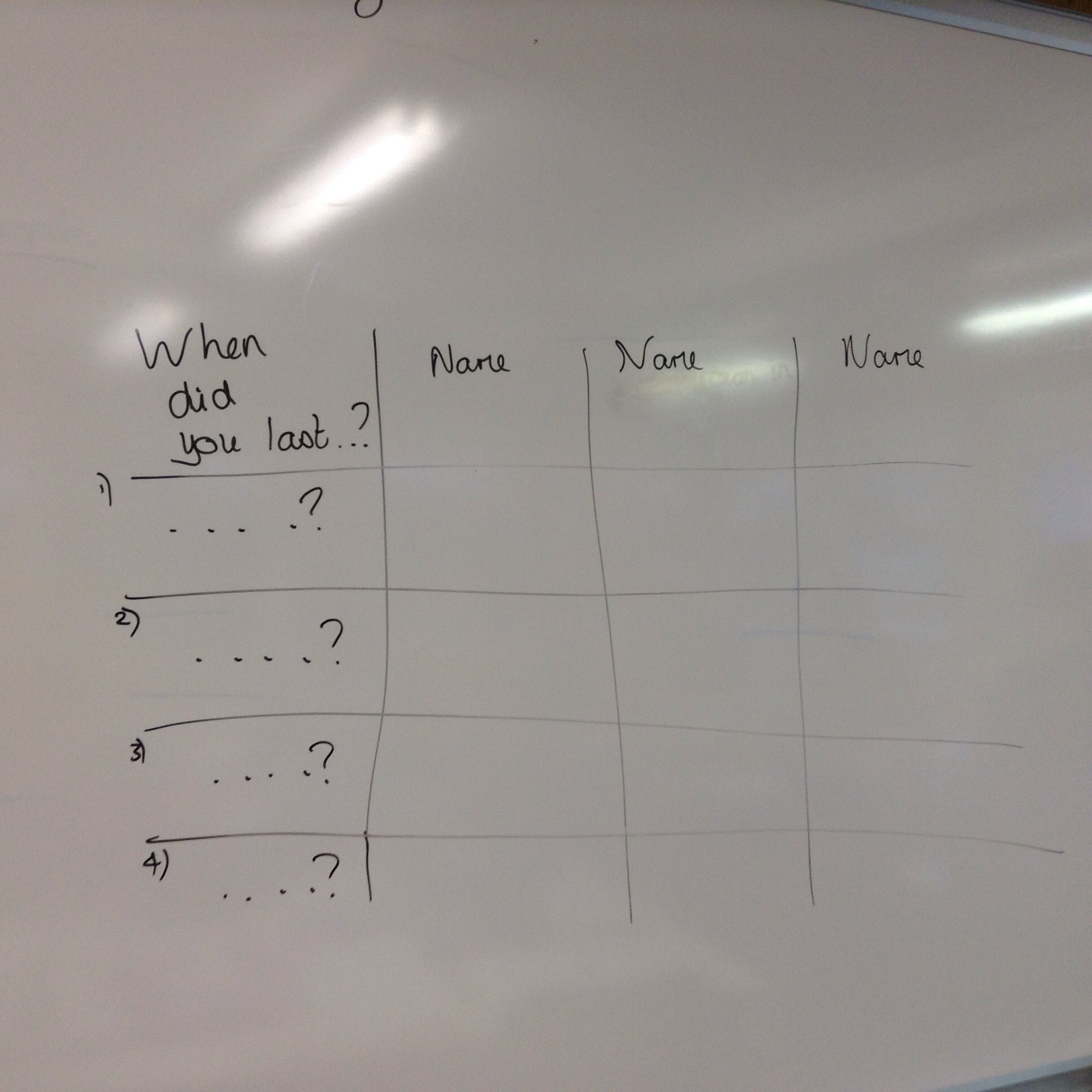
After discovering the tense and form, The students copy and add questions to the following grid:

/home/wpcom/public_html/wp-content/blogs.dir/726/61393592/files/2015/01/img_2416.jpg
Here we are practising “ago”, but you can use any question form, “can you…”, “do you…” etc.
Once they have added their own questions they go around the class collecting answers, at this point the class looks something like this:

/home/wpcom/public_html/wp-content/blogs.dir/726/61393592/files/2015/01/img_2417.jpg
After they have completed their grids,

/home/wpcom/public_html/wp-content/blogs.dir/726/61393592/files/2015/01/img_2418.jpg
We have a whole class feedback session where the students tell me what they have learnt about their classmates.
Once they have done this activity a couple of times they become pretty quick at drawing the grid and adding their questions.
Sometimes I use the information to elicit written phrases for homework.

Posted in Fab ideas | Tagged | Leave a comment

Quick and easy back to school activity

IMG_2412

I bet that, like me, you’ve taken plenty of photos over the last couple of weeks. It’s nice to be able to illustrate your chats about the holidays by showing your friends just how much your niece has grown, our how happy your son was to receive those football boots .

Your students will feel the same.

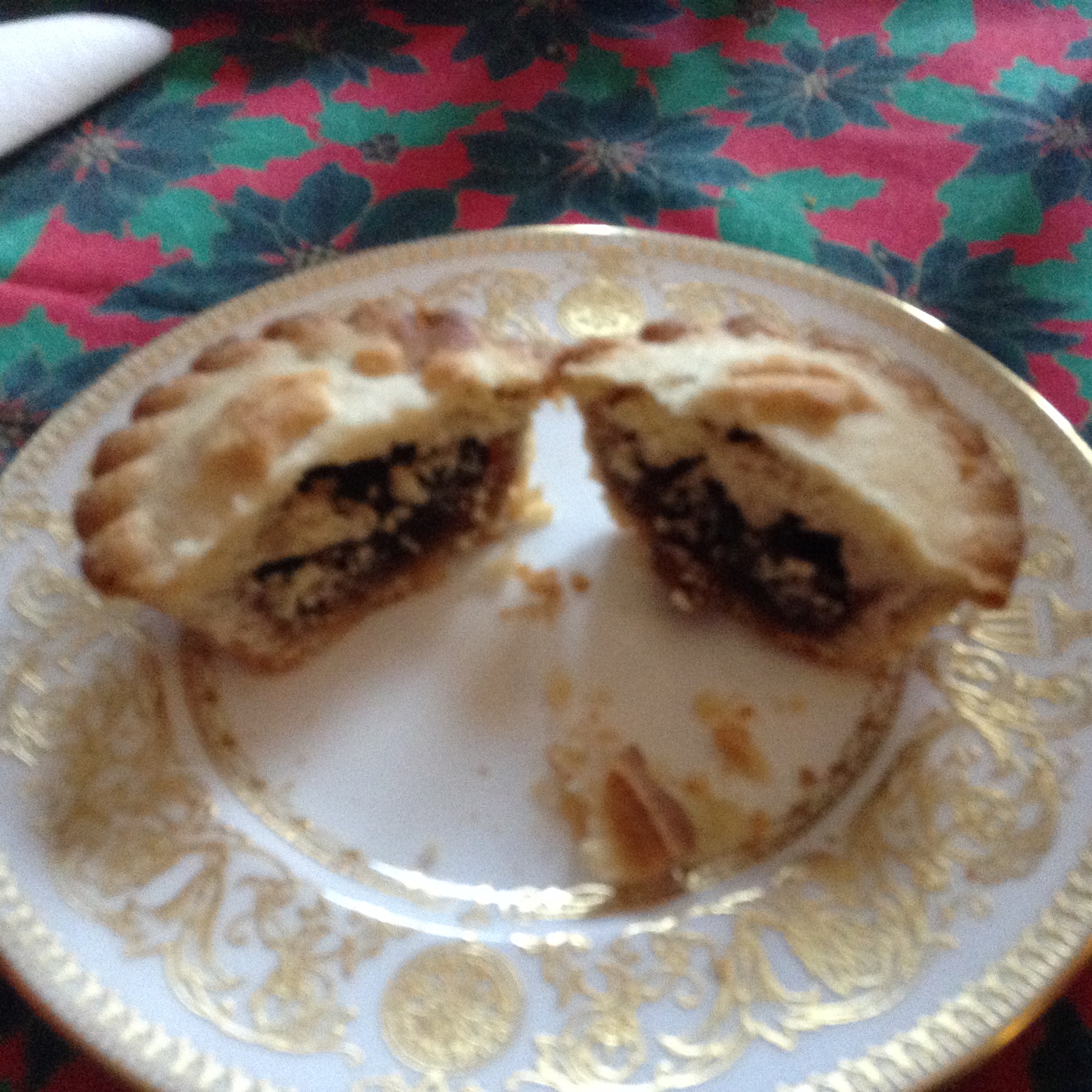
I hook my tablet up to the  interactive whiteboard and show my class some (edited) highlights of my holidays, a great moment to explain what mince pies are…

IMG_2376

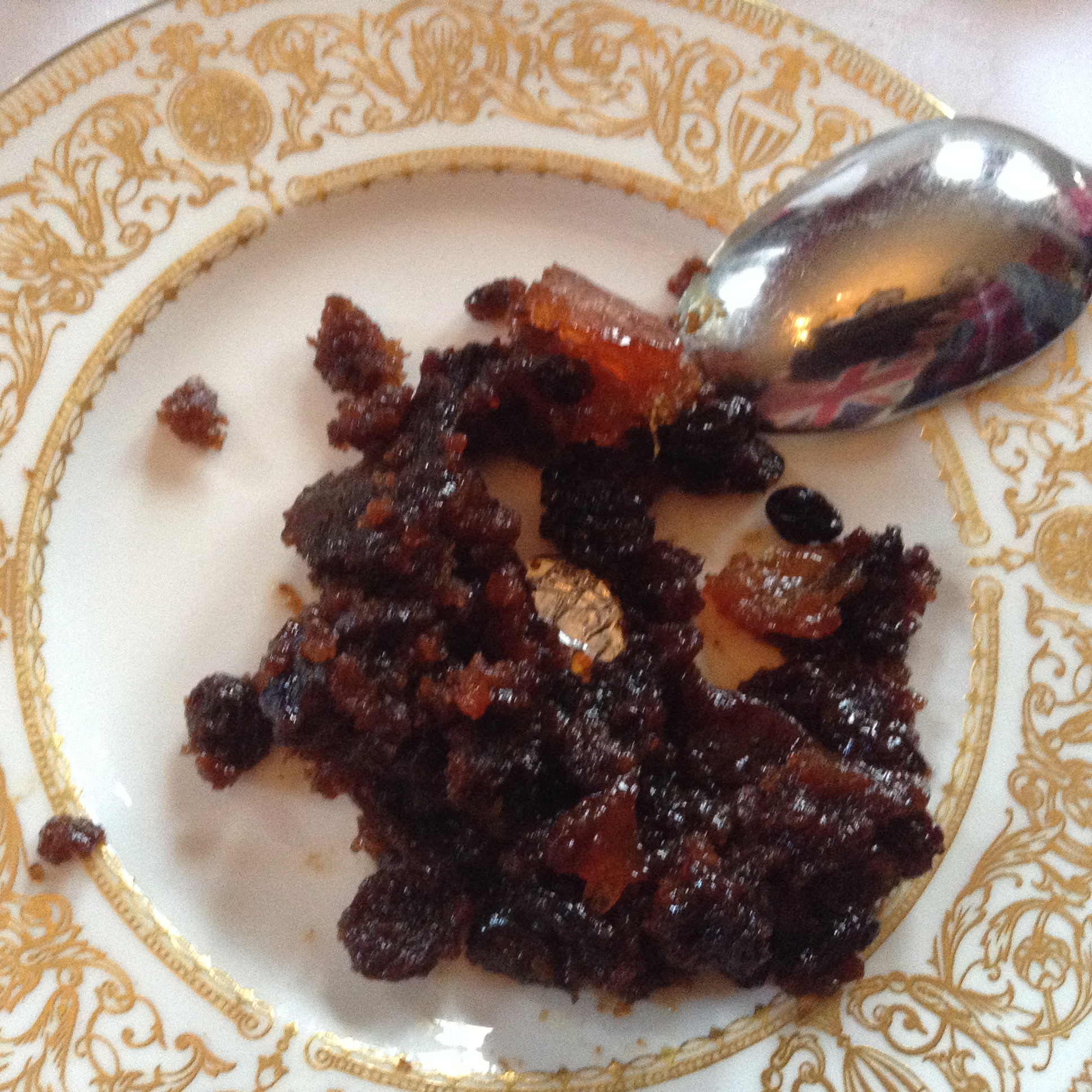
…or to explain about the coin in Christmas pudding…

IMG_2359

One-sided conversations aren’t much fun, so I quickly encourage students to show each other their holiday snaps and describe them.

Not only no preparation, but a completely “real”, natural conversation in EFL class, that’s a bonus!

Posted in Fab ideas | Leave a comment

New Year’s resolutions

It’s that time of year again, and the advantage of having a blog is that I can look back and realise how badly I failed keeping last year’s.

The thing is by now I know exactly what I should be doing in my personal life: more running, less cheese, no drinks on school nights, taking make up off every evening, that kind of thing.

The same is probably true for my professional life, but like the list above, it’s easier to say than do, regularly.

So, how badly did I fail last year’s list?

1. More work on M.A. – well I passed the first year with merit, but it was a bit tight time wise, and I found an hour a day very hard to manage.

2. PLN – Easy as pie, twitter and reading blogs was a pleasure (although my novel reading plummeted last year.

3. Use the interactive whiteboard more – not a hope, the fact that it was always out of synch once my class of baby elephants teens had walked through the room didn’t help much.

4. More pronunciation activities- yes, but… not as much as I could, must try harder.

5. Music in one class a day – no way, no time, same goes for 6. a new app a week.

2015 is more a year of exciting challenges than resolutions; I’ve recently become Geneva regional coordinator for ETAS, and will shortly become the Teens SIG coordinator too. I am co-editing the summer edition of their journal with a special supplement on Teaching Teens, with the wonderful Urs Kalberer.

I’m looking forward to giving workshops at the ETAS AGM at the end of January and am proud to have been accepted to give a talk at IATEFL Manchester.

So my resolutions are few and hopefully S.M.A.R.T.E.R. this year (Specific, Measurable, Achievable, Realistic, Time-bound, Enjoyable & Reflected © Fiona Dunlop’s CPD webinar for IATEFL):

1. Keep a regular reflective journal – three times a week.

2. Blog once a week.

3. Work for my Masters more regularly – hopefully an hour a day, although I found this hard to do last year.

4. Read a novel every month – my reading for pleasure dropped off the radar last year with everything else I was up to, and I miss it.

So, that’s it for this year, watch this space to see how I get on!

Please leave a comment and let me know yours, if they are similar we can join forces, or maybe you’ve got some good ideas for me. In any case, I’d rather a dialogue than a monologue!

Posted in teaching journal | Tagged , , | Leave a comment

Create a class memory jar

/home/wpcom/public_html/wp-content/blogs.dir/726/61393592/files/2014/12/img_2380.png

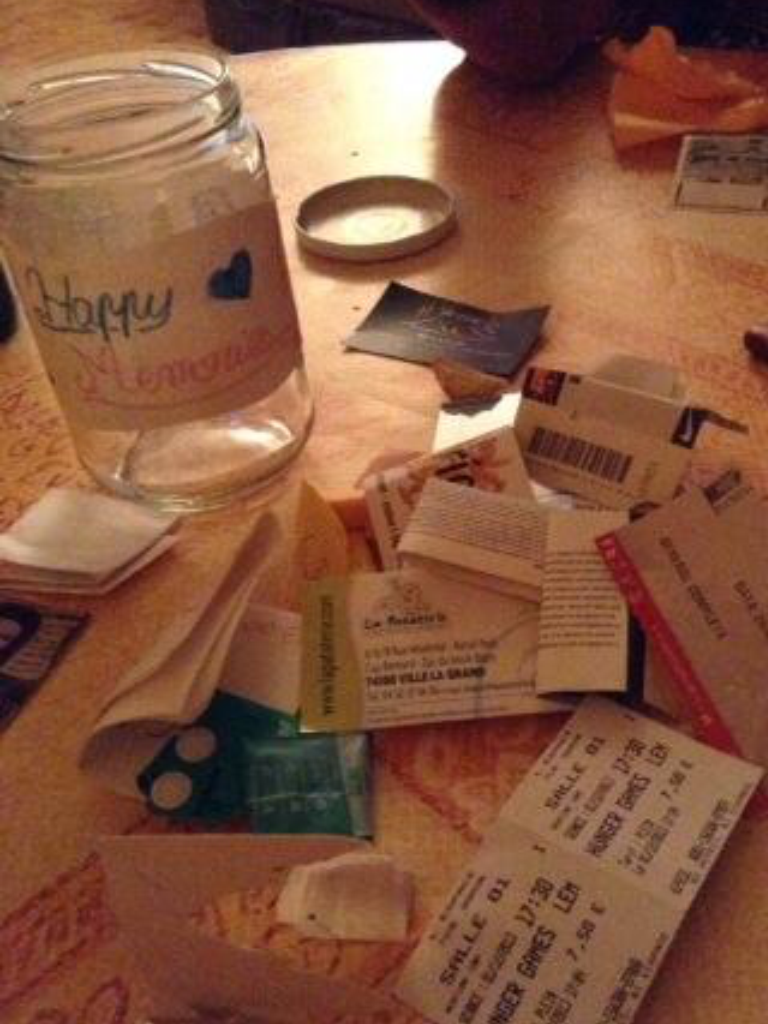
For the last couple of years our family has kept a memory jar. All year we fill it with train tickets, post-its, photos, special stones, etc.
On New Year’s eve we open it together and remember all our adventures and successes.
This year I’m going to do one with my class. As well as class outings and events I’ll ask students to bring in or make their own “certificates” for their judo competitions, piano exams, etc.
Just like with my home version, I can’t wait to open it and relive those life-affirming moments with them.

Posted in classroom management tips, Fab ideas, teaching journal | Tagged | Leave a comment