
Ways of encouraging Students to communicate in English in the EFL classroom

While L1 is becoming more accepted in the EFL classroom we still hope our students are communicating as much as possible in English. Here are some of the methods I use to ensure they speak English as much as possible:

– Visual Reminders

I have a laminated card with a Union Jack on one side and a French tricolour flag on the other (French is the native language of most of my students) which I stick on the board, if the Union Jack side is up then it’s English only. Giving them the opportunity to use French  at certain moments actually encourages them to play the game when it’s English only. A nod at the flag is often enough to get students speaking in English.

-Play Dumb

“Sorry?”, “Pardon?”, “I don’t understand” are usually enough for at least one student to point out to the “offender” that they will have to rephrase their comment or question in English if they expect a reply.

– Give them the necessary language

You can’t actually expect them to communicate in English if they don’t know the necessary lexical items to convey what they want to say.

Our school has a policy of weekly vocabulary lists and tests, so early in the school year I give them a list of useful phrases, “may I have a tissue?” “How do you say XXX in English?”

There are posters up all around the classroom with useful classroom phrases, such as “What does XXX mean?” etc.

Be sure to pre-teach or revise all necessary vocabulary before an oral activity.

If during an activity a student needs to look up a word they need I ask them to write it on the board (with translation;) as their classmates are bound to ask for the same word two minutes later.

-Give them a safe place to learn

This classroom is the place to practice English, mistakes are a useful part of the learning process. The only accent we will laugh at is the teacher’s when she tries to speak French! (The other day I told the class my pencil case was full of lovers, I meant magnets obviously!) There is an important place for just ensuring an enormous quantity of oral participation, we will deal with quality later, and perhaps have a feedback/correction session at the end of the activity, but definitely be very careful correcting students individually in front of their peers, especially teens.

– Give them something to say

There are loads of speaking activities, use as many as possible as often as possible.

With my year 9 and 10 classes we have installed NO FRENCH FRIDAY, which does just what it says on the box. I make sure we avoid new grammar items on this day and do as many oral activities as possible, such as these, but they especially enjoy lessons like this  – things to do with marshmallows and spaghetti.

-Rewards

In a teen school class using a piggy bank to fine L1 speakers is out of the question, and I’m always uncomfortable punishing someone for speaking a language, it’s far to extremist in my opinion, you never know, some of your students may actually come from places where they are really punished for speaking a certain dialect.

We all know that rewards work better than sanctions so here are a few I’ve put into place:

Marks – in many European countries students need a certain grade average to pass into the next class, so marks and results are very important to them. During no French Friday all the students start with 20/20, the rules are very simple – every time they speak French (or another language apart from English) I take off one point, and the end of the lesson this mark goes into their grades. I give back points to those who participate a lot and take off points from those who think that their best bet is to say nothing. Nothing else is marked, they can make as many mistakes as they want, these activities are to encourage spontaneous communication in English – and they work!

Send out spies – to ensure everyone plays the game, I send out spies from each group to check on the other groups, you need a healthy class atmosphere for this, and it’s a good idea to check which spies go to which groups, but done in the right spirit this works well and the students love it.

One of the best ways to get your students speaking English is to allow the use of L1 in the class at certain times, this allows students to communicate what they want when they really need to, and encourages a general interest in languages, any language. In my opinion that has to be a good thing.
Posted in Fab ideas, Friday classes | Tagged , , | Leave a comment

Recent research on the use of L1 in the EFL classroom

Reading around this subject for my talk I came across a lot of interesting stuff, this article in particular- “Let’s Humanize Language Teaching by Using L1” by Ms. Deepti Jindal, M.A., B.Ed.

One section was especially interesting, she talked about why teachers feel guilty using their students’ native language in the classroom. The issues she brought up were familiar, and have been used for years to dissuade us from using L1 to teach L2, although with a little thought they are not as solid as we previously thought.

Here are some of the reasons evoked:

-Learners have to be exposed enough to English (L2)

Yes, they obviously need exposure, but comprehensible exposure, I’m not sure a long explanation on the use of the present perfect in English will help students improve more quickly.

-L2 should be taught in the same way as the children learn L1, that is naturally

Pretending that a businessman studying English an hour or so a week for his job learns in the same way as an infant learning their maternal language is ridiculous, and patronising. If they aren’t learning in the same way, surely L1 use can be justified, especially for checking comprehension or explaining abstract ideas.

-Learners should be encouraged to develop the habit of thinking in English

Having learnt a foreign language (French) at around the same time that I was learning to be a teacher I always found this argument particularly flimsy, you cannot tell someone what language to think in, it’s like telling someone not to think about white bears – try it!

-Encouragement of L1 in class would interfere and force errors

As students are secretly thinking in their own language these errors will occur anyway, and error correction is an important part of the learning process, it’s by trying out their own language rules that students work out what the rules for their L2 are.

-Translating at regular intervals makes the learners feel that both languages have exact equivalents

They might not always have exact equivalents but they often do, and pretending “tree” and “arbre” are different things seems to be a waste of learning time in my opinion.

-Teaching ‘communication’ doesn’t mean teaching ‘translation’

No obviously it isn’t the same thing, however speakers of several language often need to translate, for colleagues, family etc. I’m always being called on for various translation or interpretation tasks for friends and workmates, so this skill is a useful one for the language learner.

-Most of the teacher training courses recommend use of L2 only.

As do most resource books, in fact apart from Scrivener’s “Learning Teaching” (which includes some useful activities involving L1) most books make no reference to L1 at all.

Other publications on the same subject brought up some interesting ideas; Nation (2003) talks of the harmful psychological effects of denying learners’ L1 and Auerbach (1993) studied what he called “neo-colonial policies” of TESOL learners in the USA. Personally this is not the case, as my maternal language is the language of the empire, the colonialists, however it is easy to see how forbidding the use of someone’s language, particularly someone who has been forced to leave their country for example could be damaging, and lead to negative feelings for the L2, which in turn will hinder learning.

I completely agree with Auerbach (1993) when he mentions the need to create a comfortable, safe and friendly learning environment, and with beginners this will be created by sharing a few jokes and finding things in common with your students, if this means having to use L1 to communicate then so be it. The same can be said for teachers working with young learners and teens, some classroom discipline will have to be explained in L1 for the class to function correctly.

Cook (2001) makes the valid point that L1 is useful in improving learning skills, an important part in fixing learning involves thinking about what has been learnt, and this metacognitive reasoning must take place in L1 to be effective and valid.

Finally, Cook equally adds an advantage of using L1 which I often use in my class, that of evaluation, what quicker way to check understanding than by asking a student to resume in their own language?

Some useful references:

Auerbach, E. 1993 Reexamining English only in the ESOL classroom TESOL Quarterly, vol 27, number 1 accessed 10/05/2014 from http://www.ncela.us/files/rcd/BE019020/Reexamining_English_Only.pdf

Bruhlmann, A. Does the L1 have a role in the foreign language classroom? A review of the literature accessed from http://journals.tc-library.org/index.php/tesol/article/viewArticle/857 23/05/2014

Cook, V. 2001. Using the First Language in the classroom accessed 23/03/2014 from http://homepage.ntlworld.com/vivian.c/Writings/Papers/L1inClass.htm

Jindal, D. 2013 Let’s humanize Language teaching by using L1 Language in India www.languageinindia.com accessed from http://www.languageinindia.com/may2013/deeptimothertongue1.pdf 17/03/2014

Kerr,P. 2014 Translation and Own-language Activities: Cambridge, CUP

Morahan, M. The Use of Student’s first language in the second language classroom accessed20/03/2014 from http://teflbootcamp.com/MorahanL2inL1class.pdf

Nation, P. 2003. The role of the first language in the foreign language classroom. Asian EFL Journal, 5 (2) accessed from http://asian-efl-journal.com/quarterly-journal/2003/06/30/the-role-of-the-first-language-in-foreign-language-learning/ 21/03/2014

Richards, J. & Lockhart, C. 1996 Reflective teaching in secondary classrooms. Cambridge; CUP

Scrivener,J. 2005 Learning Teaching. Oxford; Macmillan

Tang, J. 2002 Using L1 in the English classroom. English Teaching Forum, 40, 36-43. accessed from http://americanenglish.state.gov/files/ae/resource_files/02-40-1-h.pdf 20/03/2014

Posted in Reviews | 2 Comments

A new take on picture dictation

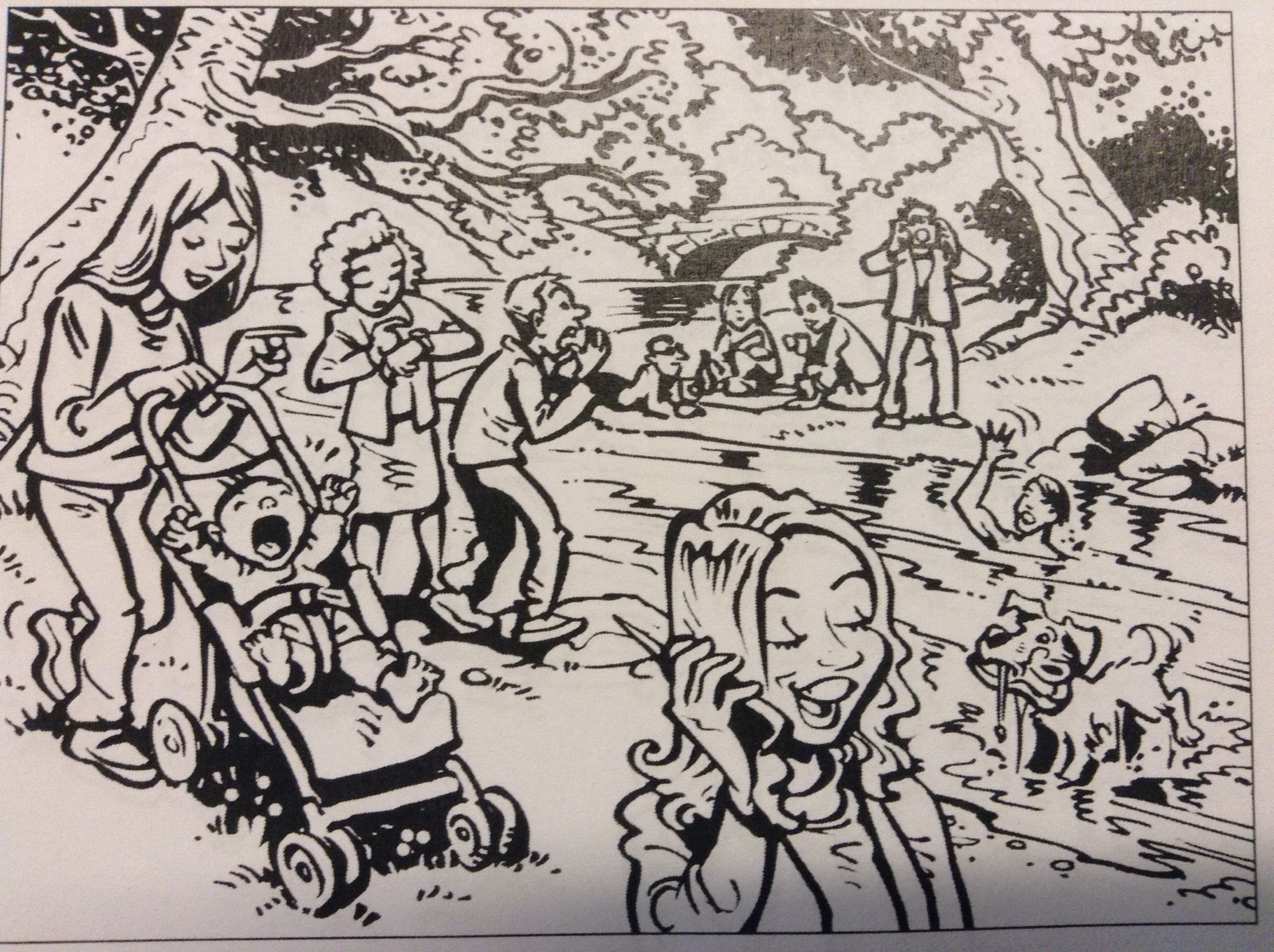
Revising the present continuous today we did a picture dictation with a difference.
Half the class described a picture to their partners:

IMG_1763.JPG
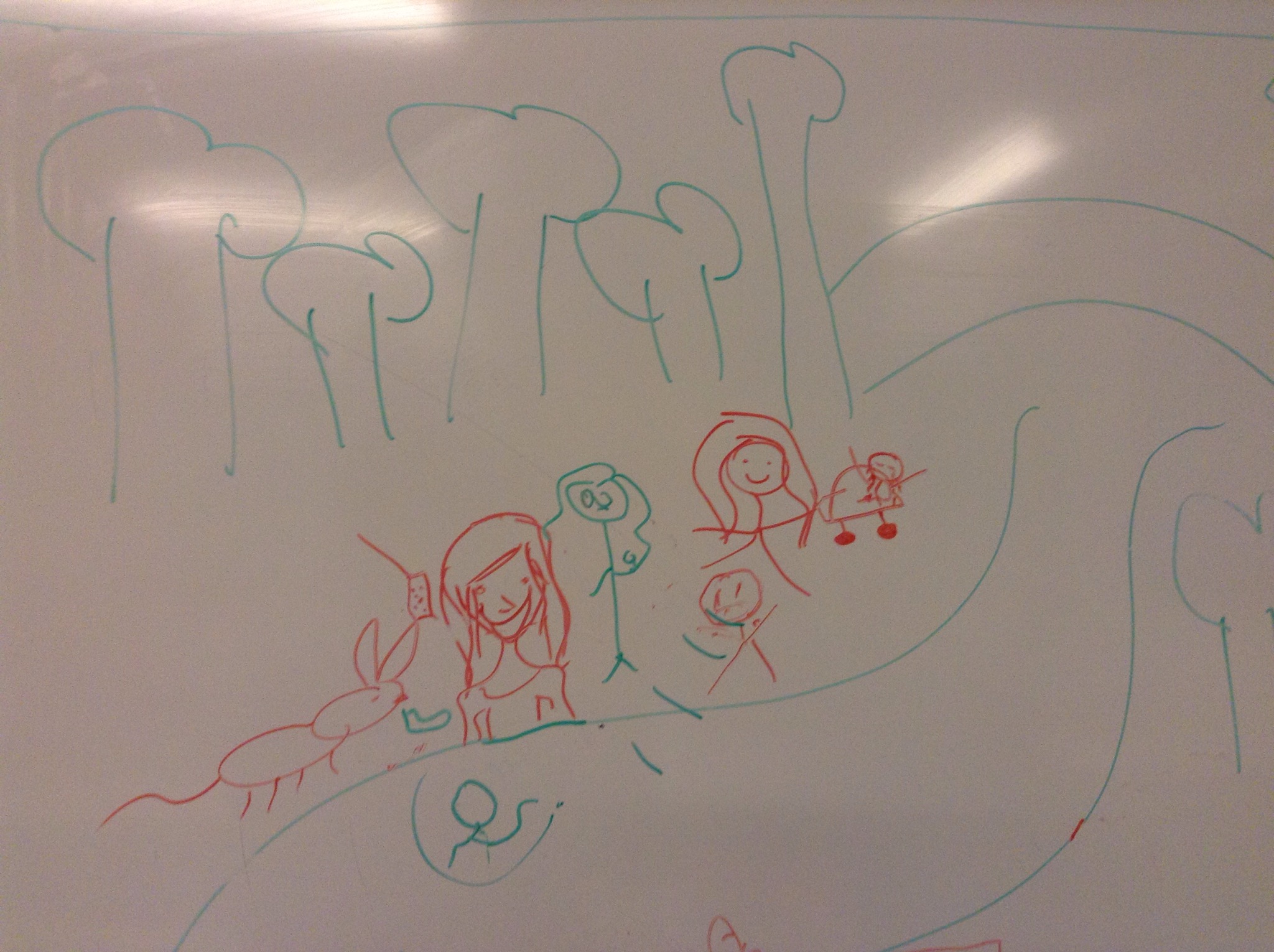
Then the listeners went and drew the picture on the board:

IMG_1762.JPG

This activity was great fun, and a lot of language was produced, not only between pairs but also amongst the group drawing on the board, not to mention those sitting down who had the picture and called out “helpful” hints to the artists!

(The original image is from PairWork book 1, Penguin books 2002)

Posted in Fab ideas | Leave a comment

Using video in the classroom – webinar by Stephanie Dimond-Bayir

Yesterday I joined a great webinar on using video in class. I love webinars, it’s so handy to get a dose of CPD and motivation while curled up on the sofa, not to mention the handy ideas to use  in class the next day – as I did today. This webinar was produced by the wonderful Cambridge English Teacher, if you are not a member then join today, not just for the webinars but also for the self study courses and the expert advice.

As I find the best way to learn something is to explain it to someone else I’m going to tell you everything I learnt yesterday.

Firstly Stephanie discussed some advantages of using video in class; students retain information more easily, they are enthusiastic about watching films, they are used to getting information from visual media, videos contain paralinguistic features to help comprehension, etc.

Disadvantages include; students feel they are being entertained not educated, film stimulates the imagination less than books, it can be a challenge to find and use appropriate authentic material, especially with low-level groups.

Stephanie referred her various suggestions on using video back to Bloom’s taxonomy, you are probably familiar with this pyramid, where the lower levels (Lower order thinking skills or “LOTS”) are remembering, understanding and analysing, and the higher levels (HOTS) include evaluating and finally creating.

Stephanie’s LOTS ideas included the following;

Backs to the screen – half the class turn their backs to the screen, the other half then watch a section of the film with the sound down and have to describe it to those who can’t see.

(Another thing you can do is play the first few minutes of the film with the sound but no image, and ask students to predict what they think is happening.)

Gap fills, ordering pictures or text so they correspond to the order seen or heard in the film, and comprehension questions also made up the LOTS.

HOTS included:

Predictions :

-draw on outline on the board (trace a screenshot from the DVD on your laptop.

-show some photo clips (using the snipping tool on your laptop).

– create a word cloud (www.wordle.com).

-image discussion – print out 4/6 images from film, get students to pin them on their front, all those with the same image get together to discuss their image, then recreate groups to include one of each picture and these new groups discuss what they think the film will be about.

Create a newspaper article (using http://www.foley.com/generators/newspaper/snippet.asp) ans ask students to use it (or just the headline) to predict what will happen.

Activities while you watch

– Give script or description with errors added and ask students to correct them.

– Create a dictogloss by watching a section a few times, giving key words and asking students to recreate the script to the best of their ability.

– Create a running dictation with various phrases pinned on walls around the class, once the students correctly dictated them to their partner who remains seated, they must watch the film to put them in the correct order.

Post-watching activities

– Help students write a summary by creating a story frame, e.g. “The story starts with______, it is set in_______, the most important characters are_____” This way you can be sure they use certain key words or expressions.

– Get students to create an online review (using http://www.screenr.com).

– Use Venn diagrams to compare and contrast characters, with similarities in the linked sections.

– Translation activity-  watch  couple of minutes of the film and get the students to produce an oral summary, watch again using English subtitles, then again using L1 subtitles. Get the students to translate the L1 subtitles into English and compare the two versions.

This morning I used a wordle and the “backs to screen” activity with my students, they enjoyed these activities and were very motivated. We are watching a whole movie (Little Miss Sunshine if you are interested) and it’s great to have some ideas to keep them attentive, sometimes watching a full-length film can become an excuse for a nap, especially if the summary is easily available on the web. Next lesson I plan to use the dictogloss activity, and also the translation one too.

I also plan to have them write and act out an epilogue scene, that would take place at the end of the movie. You can do this after the end of the film, or to get them to imagine how the film ends.

Let me know if you have any other video ideas you’d like to share.

Posted in Fab ideas | Tagged | Leave a comment

Time-easy activities

Sometimes it’s the lack of prep time that stops us playing more games in class, that’s when I outsource to child labour!

IMG_1715.JPG

Posted in Fab ideas, fast finishers, Friday classes | Leave a comment

Young Learners’ vocabulary revision idea

IMG_1675.JPG

When we have finished a chapter the pupils make a boardgame using the vocabulary they have learnt, then we play it!

Posted in Fab ideas | Leave a comment

My Top 10 Teaching books

I came across this blog post while messing about on twitter the other day, as I have a secret passion for reading books about teaching (how sad is that for a hobby?!) it was really interesting to see what other people’s recommendations are.

Of course your choice will be determined by many factors, I prefer practical ideas, with a healthy dose of humour and realism, and as I teach EFL in a secondary school and specialise in Special Education Needs my choices reflect this.

So here’s my list:

1. Learning Teaching – Jim Scrivener

If you read one book on TEFL, make it this one, a sound base in theory and good practice, with enough good advice to get you through the first years, and worth a regular re-read.

2. Teaching Languages to Young Learners – Lynne Cameron

Teaching children and teaching TEFL are not the same thing, especially in a secondary school where English is one of many subjects they learn every day.

3. Classroom Management techniques – Jim Scrivener

Good advice and ideas, when it comes to teaching children classroom management is as important as actual content, or at least necessary  in order to get the actual content across to the students.

4. Big questions in ELT – Scott Thornbury

I love Scott’s style and ideas.

While I find EFL books very useful, I also get a lot out of reading books aimed at school teachers in the UK or U.S.A.

5. How to teach – Phil Beadle

A book about teaching that makes you snort with laughter has got to be a good thing!

6. The lazy teachers’ handbook – Jim Smith

One of the downsides about new ideas and materials that books bring is all the extra work that you don’t have time for, not so with this book.

7.  Teach like a Champion – Doug Lemov

A great book with loads of practical ideas, like exit ticket, no excuses, etc.

8. 100+ ideas for… Continuum

A great series packed with practical ideas for teaching dyslexic students, dyspraxic students, secondary classes, etc.

9. The teacher’s toolkit: Raise classroom achievement with strategies for every learner – Paul Ginnis

Does exactly what it says on the box.

10. How to be a brilliant teacher – Trevor Wright

This book is part teaching skills, part self-help book, not for everyone, but worth a feel-good read at the end of a tough week.

So, now it’s your turn, what are your favourites?

Posted in Reviews | Leave a comment

Dyslexia in the EFL classroom – some reading material

It’s hard to know where to start so here are some of the books I’ve found useful, in order of “importance”, if you can only read a couple, start at the top:

Reid, G. & Green, S. 2011 100+ ideas for supporting children with dyslexia. London: Continuum

Reid,G. 2011 Dyslexia- a complete guide for parents and those who help them. Sussex: John Wiley & Sons Ltd.

Schneider,E. & Crombie,M. 2003 Dyslexia and Foreign Language learning, Oxon: David Fulton Publishers

Posted in Special Educational Needs | 1 Comment

Top tips to help dyslexic students

Obviously every pupil  is different so these ideas will work with some but not necessarily all, the best thing to do is try them out and see what works, once you get to know your student it’s easier to know what will be most effective, and if you’re not sure, ask them!

I have found that most of these ideas help ALL my students, dyslexic or not.

Try and start the school year and even the lesson with something easy to get everyone in the mood for learning English, remember “nothing succeeds like success”.

Give more time to those who need it, this might simply mean alerting the students that their turn is coming – “John, when I’ve asked Claire and Mike about their weekend, I’ll be asking you”. This gives John time to prepare, but also Claire and Mike!

Give instructions one at a time, be sure to stand still and get the student’s attention by calling their name, be sure you have their attention before starting, be clear, model the activity with another student, write the instructions on the board. Chunk your instructions, dyslexic students can have difficulty using their working memory so a long string of things to do will be hard to remember.

Place the students who need most support in your “action zone”, most teachers have an area of the class they tend to give more attention to, usually this is the first few rows, centre or centre-right of the classroom.

Avoid lots of copying off the board, give handouts in dyslexia friendly fonts (Comic sans, Times New Roman, or even special downloadable dyslexia fonts) and use pastel coloured or recycled paper which doesn’t have so much of a glare as new white paper. Make sure you don’t cram too much onto one page, leave plenty of space between paragraphs.

Scaffold, explain, don’t expect them to “notice” grammar rules.

Dyslexic students have less sight words (words that we recognize by sight, rather than having to phonetically decipher) so why not print and laminate a chart of frequently used words?

Read out reading texts so the students can hear the pronunciation of unfamiliar words.

If necessary, record yourself reading a text (on their phone for example) so they can listen to it as often as possible.

Think-Pair-Share – give students time to collect their thoughts before they talk to their partner, then in groups choose someone (else) to be scribe, timekeeper, devil’s advocate, idea bank, etc. If you think carefully about your groups you have peer tutoring going on as well.

Encourage students to come up with mnemonic devices and acronyms to help remember key words.

Use KWL grids – created by Donna Ogle in 1986, students complete grids, firstly noting what K – what they already KNOW, W – what they WANT to know, and lastly, L- what they have learnt, thinking about what you’ve learnt is an important way of reaffirming learning.

Tests & Evaluations – start with easy questions, you don’t want anyone getting zero, so start with something less challenging so students don’t block or panic at the first step.

Use multiple choice, crosswords, matching images etc. to avoid writing where possible.

Wherever possible let students use computers or tablets, finished work can be produced using videos or oral recordings, comic strips, posters, drama productions, anything that the students feel comfortable with.

These are just a few ideas, many more can be found on the internet, in relevant literature, or by just spending time with yours students.

Posted in Special Educational Needs | Leave a comment

How to spot dyslexia in the secondary EFL classroom

Thankfully nowadays the vast majority of primary teachers know what to look out for and children are usually assessed before arriving at secondary school. Without going into all the elements that make up a dyslexia assessment here are a few to think about;

  • phonological processing and decoding is difficult, so many dyslexics find it hard to identitify phonemes or letters in words, eg. Can you hear the letter “a” in bland? Or “how many sounds can you hear in “bland”? – this can be seen at a young age by difficulties in learning nursery rhymes, dyslexic children can’t always decipher the individual words, especially when rhythm makes them all run into each other.
  • Personally I have spotted students who have not yet been assessed for dyslexia but that I think may be affected. I give my students weekly vocab tests (before you all gasp in horror, it is our school’s policy to give a list of words to be learnt for a test every week, the validation of this is something we can go into later), and occasionally I’ll come across someone like Jane, who has obviously learnt her words, and probably worked really hard, not like some of my students who write or say “it’s a legume”, and hope to get away with it. However every word has at least one spelling mistake, “ushanb” is “husband”, “egli” is “ugly”.
  • Other signs include omission of words, difficulty following instructions – as short-term memory is effected, students who don’t get to work with the rest of the class, or automatically start “chatting” whenever you set a task are probably asking their neighbour what to do, frightened of being caught out.
  • Sadly other signs of a student with learning difficulties include frustration, anger, tiredness and especially, lack of self-esteem. They may also have difficulty in social situations and find it harder than others to make friends or deal with new situations.
  • An essential point to remember is that dyslexic students are often very hardworking, they have to be to keep up with the demands on their short-term memory and processing skills, often a student who seems really serious, but never seems to get the results you would expect, some people say students have to use five times as much energy and effort to produce the same work as a non-dyslexic student.
  • Keep an eye on the student who seems to have totally given up, arrives late, always gets sent out because he’s “forgotten” his books. There are plenty of ways to get around having to read out loud in class.

What should you do if you spot a student you think has a specific educational need?

Ask! – his class teacher, his previous teachers, his parents – tactfully, and him.

Talk to the student and his parents and ask how language learning was previously. Ask what the students finds challenging and what you can put into place together to help him succeed.

(Yes, I know I’ve used “he” to refer to my student throughout this article, it was to get you reacting!)

Posted in Special Educational Needs | Leave a comment